Stronger decentralization key to Hanoi's urban railway ambitions
With transformative policies that include amendments to the Capital Law and specific proposals for urban rail projects, Hanoi is committed to achieving its intended goals for urban rail development.
Hanoi is intensifying efforts to complete its urban rail network in response to the increasing traffic volume, which necessitates greater decentralization.
Specific plans in place
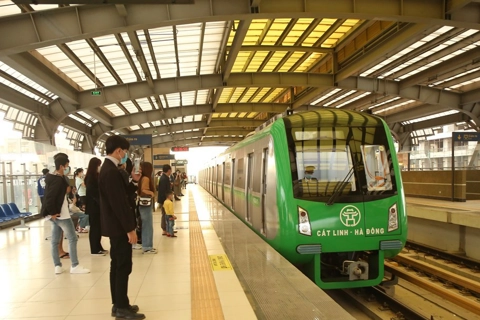
| The Cat Linh - Ha Dong urban railway line. Photo: Pham Cong/The Hanoi Times |
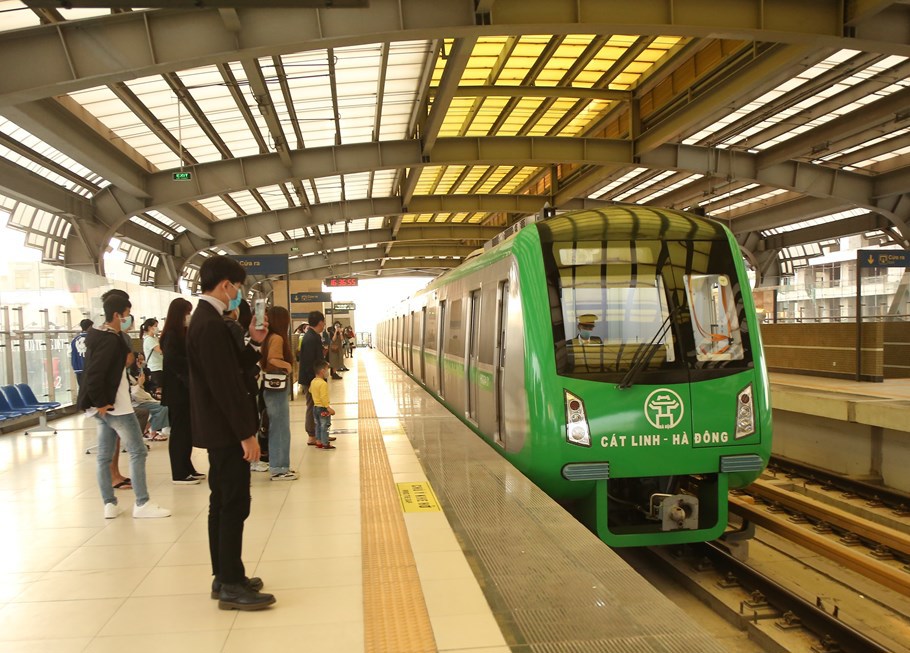
Hanoi aims to have 10 urban railway lines by 2035, covering about 410.8 kilometers with a total investment of about US$37.2 billion. This target is part of the capital's transport planning approved by the Prime Minister on March 31, 2016.
The adjusted overall plan for the capital from 2036 to 2045 envisages the construction of an additional 200.7 kilometers of urban railway, at an estimated cost of US$18.2 billion. This would bring the total number of light rail lines to 14, stretching about 616.9 kilometers by 2045.
Hanoi's goal is to develop a modern, synchronized urban rail network to meet growing commuter demand. The city aims for public transport to account for 50-55% of passenger volume by 2035, rising to 65-70% thereafter.
To achieve these goals, the city has developed a comprehensive plan for the development of the urban rail network, structured as "one plan, three phases".
Phase breakdown
| Testing the Nhon - Hanoi Station railway line. Photo: The Hanoi Times |
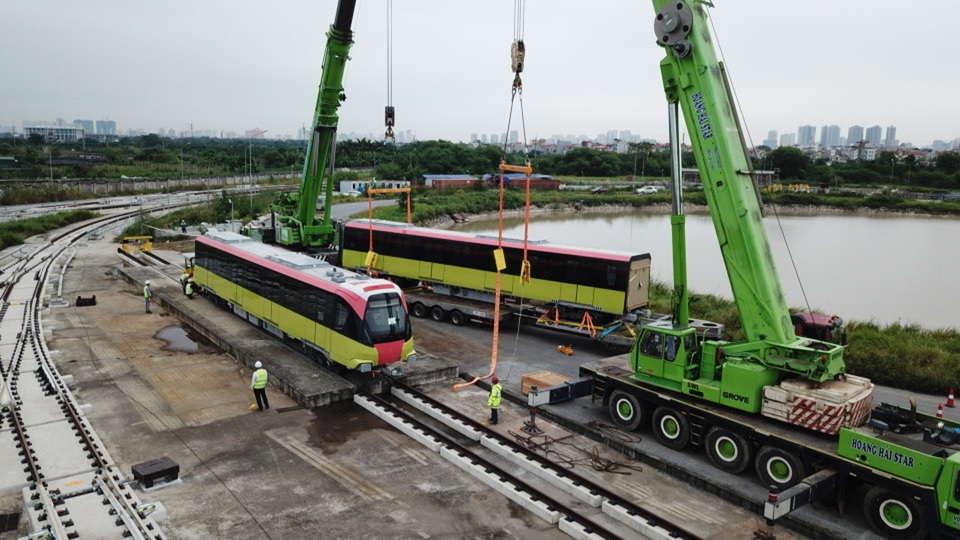
From 2024 to 2030, the plan indicates the completion of 96.8 kilometers of railway construction (lines 2, 3, and 5) and preparation for investment in an additional 301 kilometers (including line 1, extension of line 2A, lines 4, 6, 7, 8, and connections to satellite urban areas such as Son Tay, Hoa Lac, and Xuan Mai). If successful, the metro could handle 7-8% of public transport volume by 2030, carrying 2.2 to 2.6 million passengers per day.
From 2031 to 2035, about 301 kilometers of urban rail will be built. After 2030, the network is expected to carry 35-40% of the public transport volume, with 9.7 to 11.8 million rides per day.
From 2036 to 2045, the plan is to complete the construction of an additional 200.7 kilometers of extended urban rail lines.
Overall, the total investment required for Hanoi's urban rail network through 2035 is estimated at approximately $37.2 billion, with an additional $18.2 billion required from 2035 to 2045, bringing the total funding requirement to approximately $55.4 billion by 2045.
Conclusion No. 49 - KL/TW of the Political Bureau has outlined a perspective for mobilizing resources for the development of a modern, synchronized rail transport system. It emphasizes the maximization of resource mobilization, prioritizing domestic funding as the primary and long-term source, with the state budget playing a central role. External resources are considered important for achieving breakthroughs.
The conclusion also highlights the need to prioritize the allocation of resources in the medium-term public investment plan, using increased revenues, annual savings, effective land use and extra-budgetary resources for railway development.
Hanoi has developed a specific plan to raise investment capital for its urban rail system, focusing on land use rights auctions and transit-oriented development (TOD). The city also plans to secure funding through ODA loans, domestic bonds, green bonds (international loans), and support from the central government budget.
To attract private investors, the city will continue to refine policies, including infrastructure investment budgets, compensation for land clearance, and support for resettlement. This will include competitive bidding for private investors to procure locomotives, rolling stock, control systems, information technology, signaling systems, and electromechanical equipment as part of a comprehensive package.
In addition, measures will be implemented to ensure consistency throughout the implementation of the urban railway project, allowing investors to obtain rights to use parts of the infrastructure and participate in the development of projects within the planned TOD areas.
To optimize investment, operating and maintenance costs, the selection of technologies and techniques will follow principles that ensure interoperability across the entire metro network. This includes establishing a standard technical framework for the network and defining design parameters for use.
Need for breakthrough policies in urban railway development
| Inside Cat Linh-Ha Dong urban railway. Photo: Hong Thai/The Hanoi Times |
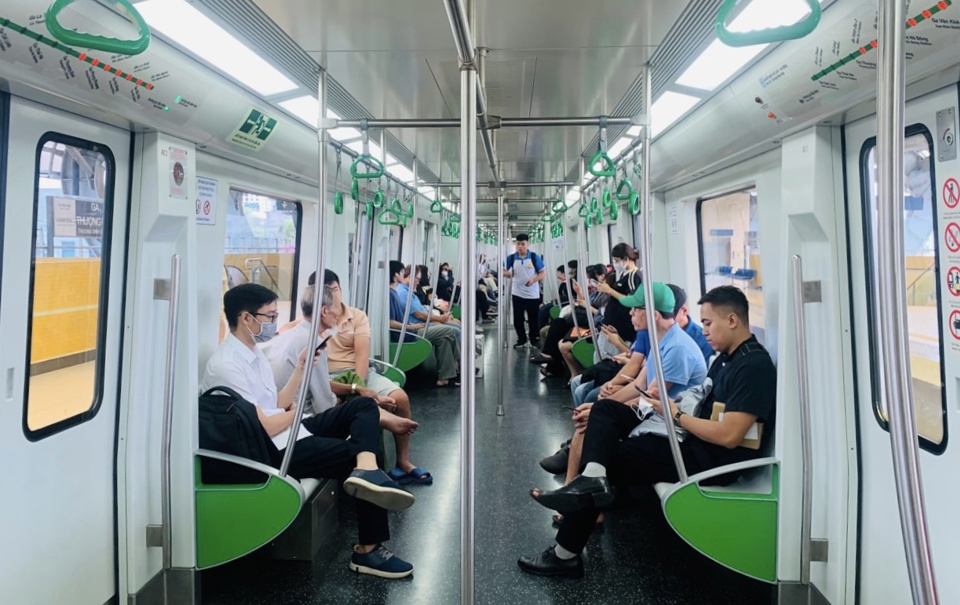
In the initial phase of urban railway management, Hanoi will continue with a two-unit model. The first unit, the Urban Railway Management Board (MRB), is responsible for planning, investment preparation, and construction of the urban railway lines, as well as controlling land use and urban development in TOD areas according to approved plans. The second unit, the Hanoi Urban Railway Company, will operate the urban railway infrastructure.
As these two units gain experience in implementing the TOD model and building a skilled workforce capable of self-financing operations, Hanoi plans to transition to a single state-owned enterprise responsible for urban rail investment, operation, and TOD development.
Currently, the most pressing issue is the need for specific mechanisms and policies to facilitate investment in urban railways, of which there are 20 pending policies requiring approval by the National Assembly and seven by the government.
The comprehensive development plan for Hanoi's urban railway system has been approved by the Hanoi People's Committee and is being refined with input from various ministries and agencies. The Hanoi City Council has agreed on the need to develop a proposal to report to relevant authorities, emphasizing the need for a breakthrough policy to decentralize authority and focus resources to accelerate urban railway projects.
The Executive Bureau of the Hanoi Party Committee also provided feedback and instructed the Hanoi People's Committee to finalize the proposal for review by the Party Central Committee.
Deputy Prime Minister Tran Hong Ha has agreed to the proposed investment schedule for the urban railway lines in accordance with the Political Bureau's Conclusion No. 49-KL/TW, as stated in Notification No. 443/TB - VPCP dated October 1, 2024.
The overall investment proposal for the urban railway system has been carefully studied with the input of many experts, scholars and relevant government agencies.
In order to realize the "urban railway miracle" in line with the objectives set out in Conclusion No. 49, the Hanoi People's Committee is actively working with the Ho Chi Minh City People's Committee and the Ministry of Transport to gather feedback and finalize the proposal for submission to the National Assembly.
If approved, the resolution will unify the investment strategy for the urban rail system and establish a phased investment plan through 2035. This includes the implementation of special mechanisms to facilitate financing, robust decentralization for Hanoi, expedited procedures, and accelerated project completion.
Hanoi is committed to achieving its urban railway goals on schedule and has adopted a transformative policy that includes amendments to the Capital Law and specific proposals for urban railway projects.