Two social housing projects offered for sale as Hanoi strives to meet mounting demand
Hanoi launches sales for CT-05 and CT-06 social housing projects in Quang Minh Commune, offering low-cost units as the city faces rising housing pressure.
THE HANOI TIMES — The Hanoi Department of Construction has announced the sale of two social housing projects, CT-05 and CT-06 in Quang Minh Commune’s Thanh Lam - Dai Thinh 2 Urban Area, with selling prices starting from VND14.5 million (US$580) per square meter.

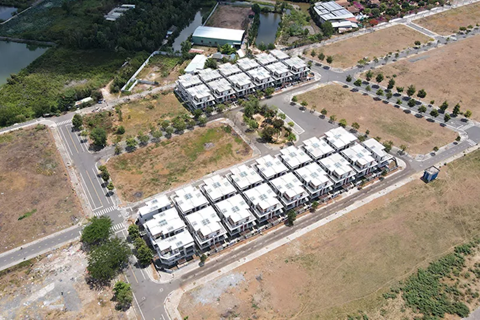
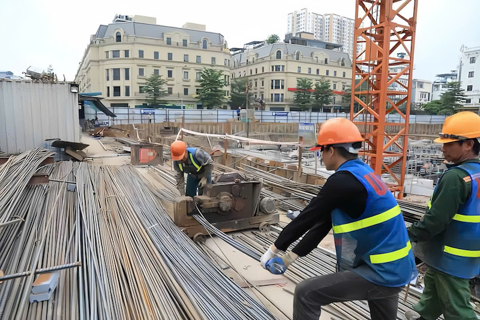
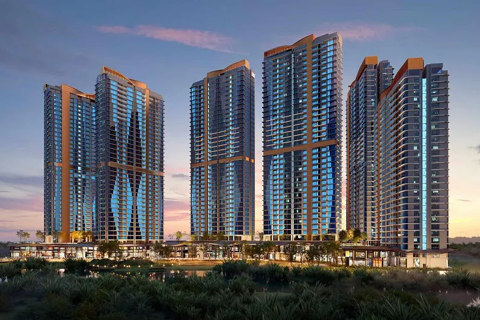
The CT-05 and CT-06 social housing projects are located about 30km from downtown Hanoi. Photo: HUD.
Developed by the Housing and Urban Development Corporation (HUD), both CT-05 and CT-06 complexes share the same specifications: a land area of 2,513 m², a construction density of 32.6%, a total floor area of 14,093 m² and a height of six floors.
Each project includes 122 apartments, 89 for sale and 33 for rent, ranging from 56 to 68 m². Each complex has a capacity of 445 residents.
Both projects are expected to be completed in Q4/2026.
The selling price for both projects is set at some VND14.5 million ($580) per square meter, VAT included, equivalent to VND815-993 million ($30,900-$37,650) per unit, with a maintenance fee of nearly VND280,000 ($10.6) per square meter.
Applications for purchasing or renting units can be submitted in December 2025.
As Vietnam’s political, administrative and economic hub, Hanoi is facing enormous pressure to meet housing demand, particularly in the social housing segment for low-income earners, workers and young families.
According to the department, from early 2025 to date, the city has completed one project with about 1,340 units. Five additional projects are eligible to enter the market with roughly 4,630 units.
Combined with approximately 11,300 units delivered during 2021-2024, Hanoi now has 16 eligible projects totaling around 17,300 units for the 2021-2025 period.
The city is also developing six ongoing projects with roughly 4,460 units, while two more social housing projects, covering 5.75 hectares and supplying about 2,160 units, have been assigned to developers.
Additionally, 29 projects are under appraisal for investment approval, involving roughly 70 hectares of land and an estimated 28,300 units.
Under the national housing development plan, Hanoi must complete about 56,200 social housing units by 2030, including 37,500 units between 2026-2030.