Vietnam building soft power: a cultural seed is a must
Vietnam should delve deeply into its core cultural values and identify a distinctive cultural foundation to nurture and amplify its soft power globally.
THE HANOI TIMES — For the first time, Vietnam has adopted a national communications strategy to promote its brand abroad for the 2026-2030 period. Issued by Prime Minister Pham Minh Chinh late January, the strategy defines international brand-building not merely as a communications or publicity exercise, but as a strategic soft-power tool directly serving national development and closely aligned with Vietnam’s long-term goals through 2045.
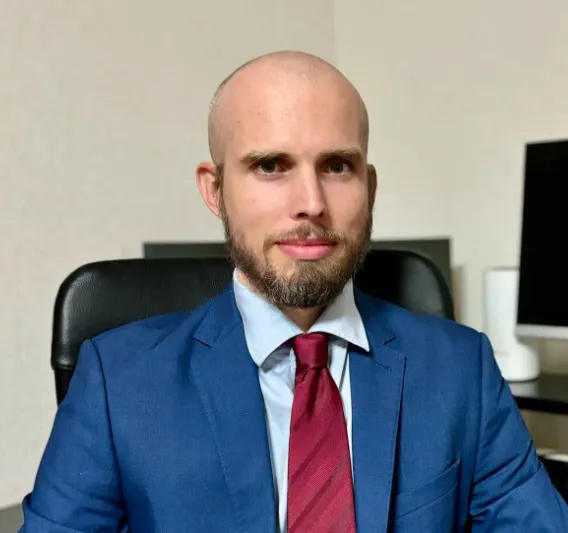
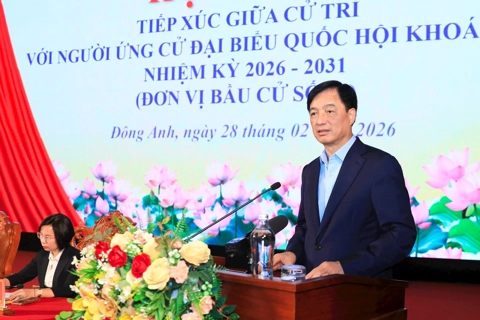
Associate Professor Nicholas Chapman of Tohoku University, Japan.
Speaking to The Hanoi Times, expert Nicholas Chapman of Tohoku University in Japan said the strategy’s ambitious targets are achievable, given Vietnam’s solid foundations in diplomacy, culture and economic potential.
The strategy, for the first time, sets out a requirement to develop a unified national message and visual identity at a strategic level for Vietnam. What does the release of the strategy at this time mean, in your view?
I believe the release of this document signifies Vietnam’s transition from the realization stage to the implementation stage of soft power. Soft power facilitation involves three distinct stages: realization, implementation and activation.
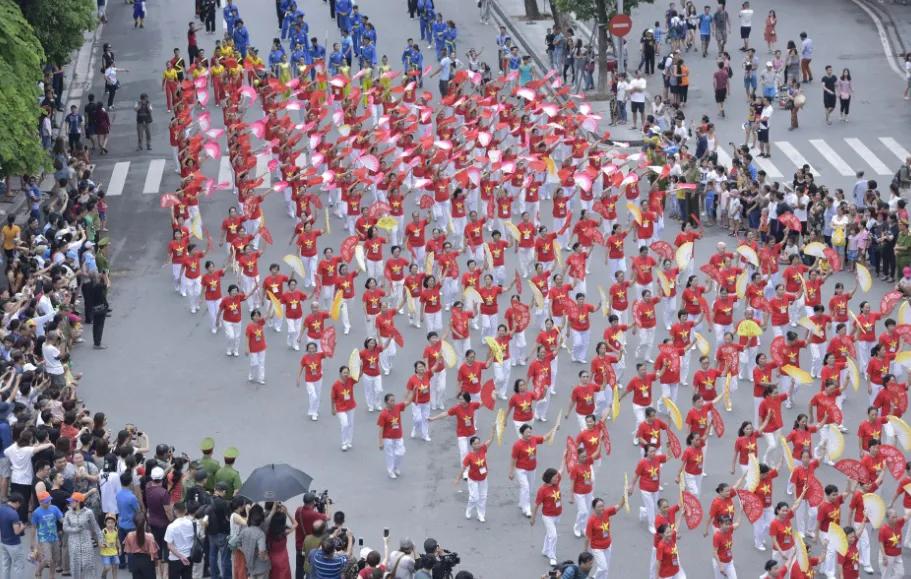
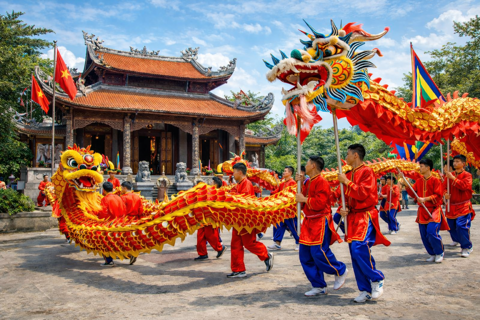
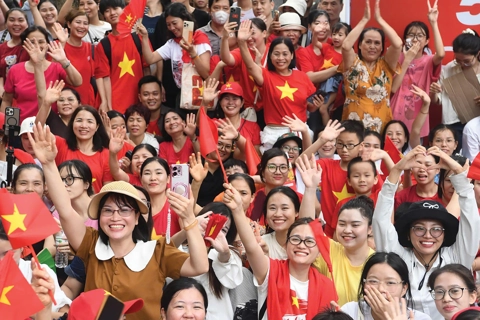
People parade on a pedestrian street in Hanoi. Photo: The Hanoi Times
The 13th National Party Congress in February 2021, for the first time, defined soft power for Vietnam. Diplomacy was particularly emphasized as a means of bolstering Vietnam’s soft power, which is arguably its greatest strength in this regard.
On the diplomatic stage, Vietnam has demonstrated astute navigation of international challenges, solidifying its reputation as a reliable and honest partner that prioritizes peace, stability and international integration.
The 14th Party Congress in January aims to build upon this capital by formulating and orchestrating a more holistic approach to soft power, emphasizing the importance of a unified message.
The final stage, activation, involves transforming Vietnam’s initiatives and strategies into the essence of soft power that benefits Vietnam’s national interests. While this stage is still distant, a unified messaging strategy is crucial to achieve it as it will provide all governmental ministries with an overall framework.
Which factors, in your opinion, could contribute to strengthening Vietnam’s soft power?
Three factors are essential for Vietnam’s strengthening of soft power are continued economic capacity building, institutional coordination and "cultural seed".
Hard power is often said to underpin soft power. Vietnam needs to cultivate hard power to better achieve its soft power aims, especially given the stated aims of its strategy. Greater economic growth is fundamental to this.
The US, the UK, South Korea and Japan are countries associated with soft power. These countries have instantly recognizable companies, such as Japan’s Panasonic and South Korea’s LG. Vietnam has laid the groundwork for developing domestic companies that can be national champions, most notably with Resolution 68 on private sector development.
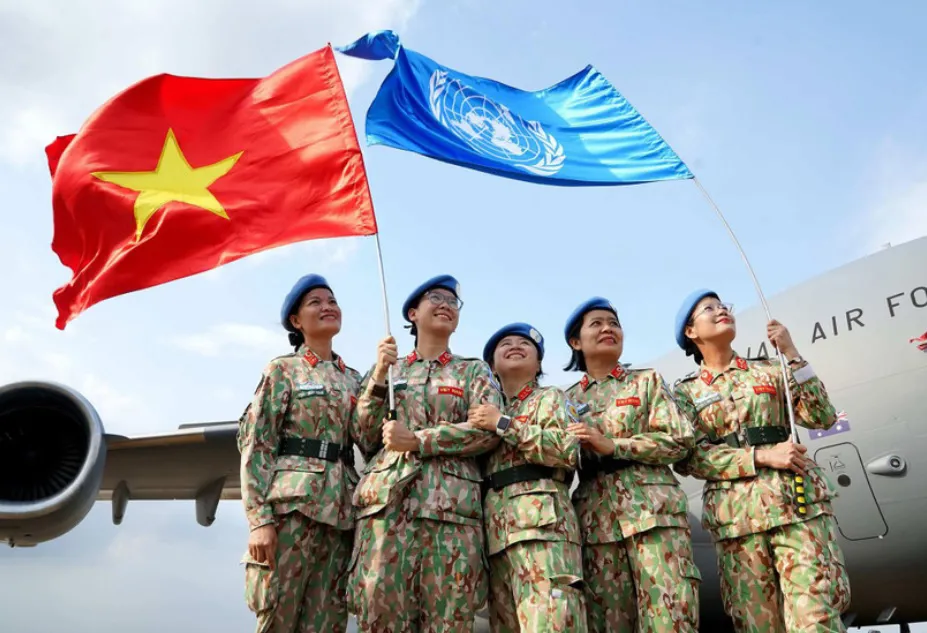
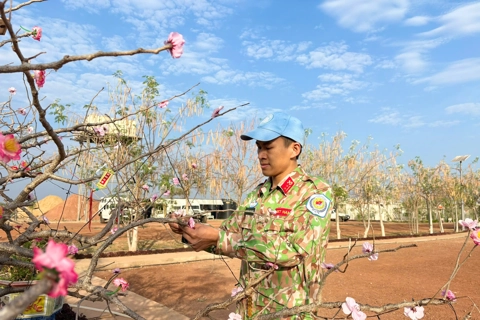
Female personnel of Vietnam’s level-2 field hospital depart for a UN peacekeeping mission in South Sudan. Photo: Nhan Dan Newspaper
However, realizing this is still far away. For now, Vietnam needs to continue prioritizing efficient technological transfer, workforce skill-building and ensuring these companies move up the value chain so their growth can evolve and become valuable to the global community. This, in turn, will have a knock-on effect as countries across the globe get more associated with Vietnamese companies and brands.
Cultivating soft power also requires relevant resources. The more the Vietnamese economy progresses, the more resources it will have to devote to promoting its brand abroad.
In regard to the second aspect, Vietnam should establish a central agency responsible for facilitating the spread of its culture, arts and language. This agency should be modeled after South Korea and Japan. Additionally, the government should consider establishing Vietnamese cultural centers abroad to enhance the dissemination of its unified message.
The most challenging aspect to ensure is planting "a cultural seed" to captivate the world, like Japan’s Dragon Ball and South Korea’s Squid Games. These cultural icons have sown the seeds that have enabled the existence of anime and culture to flourish. This is not limited to entertainment as food can also play an important role.
Vietnamese cuisine is gaining global recognition, but there is still room for further growth. The potential is there, it just needs to be nurtured.
What do you think about the feasibility of Vietnam ranking among the top three in ASEAN and the top 30 globally in the Soft Power Index by 2045? What foundations are needed to achieve this target?
I must say these targets are ambitious but feasible. Within ASEAN in particular, Vietnam is well positioned to aim for a top-three ranking in the Soft Power Index by 2045.
Compared with many regional peers, Vietnam already benefits from a relatively strong and coherent national narrative, a stable political environment and a growing international profile driven by sustained economic integration and diplomatic engagement.
Vietnam’s diplomacy provides a particularly strong foundation for advancing its soft power.
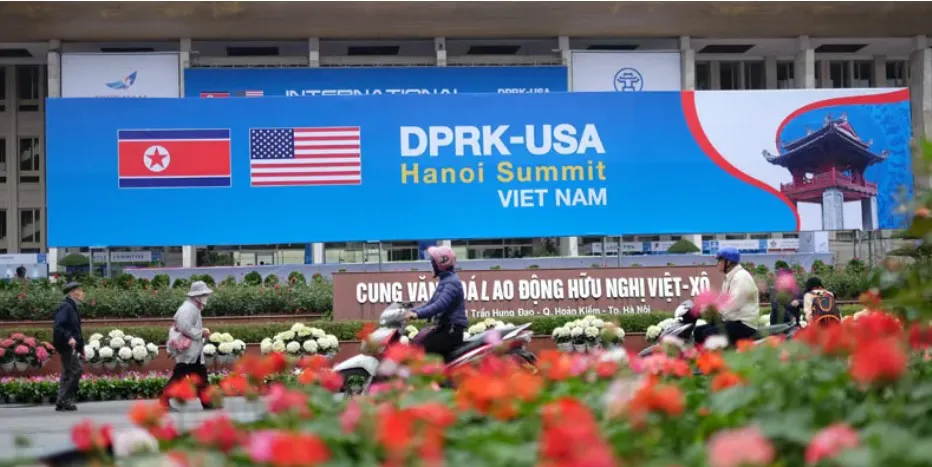
The second US-North Korea summit took place in Hanoi, Vietnam in 2019. Photo: The Hanoi Times
In recent years, Hanoi has demonstrated a high degree of strategic agility, maintaining balanced and constructive relations with major powers while deepening partnerships across ASEAN, Europe and the broader Indo-Pacific. This approach has enhanced Vietnam’s reputation as a reliable, pragmatic and autonomous actor in an increasingly polarized international environment.
Such credibility and trust are core components of soft power and give Vietnam an advantage over countries whose foreign policies are perceived as more reactive or constrained.
Beyond diplomacy, Vietnam’s expanding participation in multilateral institutions, peacekeeping operations and international trade frameworks reinforces its image as a responsible stakeholder in global affairs.
Culturally, Vietnam possesses rich historical and cultural assets that remain underleveraged internationally but offer substantial long-term potential if paired with more systematic cultural promotion, educational exchanges and public diplomacy initiatives.
Achieving a top-30 global ranking will be more challenging, given competition from established soft-power leaders with long-standing global cultural, educational and media influence. However, it is not unrealistic over a two-decade horizon.
If Vietnam can effectively build on its diplomatic strengths, continue economic modernization and invest more strategically in cultural outreach, innovation and global communications, progress toward this goal is plausible. In this sense, strong diplomacy is not only a starting point but a key multiplier that can help translate Vietnam’s material and cultural assets into sustained soft-power gains.
Thank you for your sharing!
Based at Tohoku University in Japan, Nicholas Chapman is a researcher specializing in Vietnamese foreign policy, political economy and history. His work also explores security issues in the Indo-Pacific and labour migration in Asia. He holds a MA and a PhD in International Relations from the International University of Japan.