These contributions reflect the banking sector’s social responsibility, especially in helping to eliminate unsafe and makeshift housing.
THE HANOI TIMES — The Vietnam Fatherland Front received VND82 billion (US$3.2 million) from banking workers on July 14 to support a national program replacing dilapidated and makeshift houses.
The funds will be used to build nearly 1,400 new houses, each receiving VND60 million (US$2,350). This donation will help meet the prime minister's directive to eliminate unsafe housing nationwide by August 31, 2025.
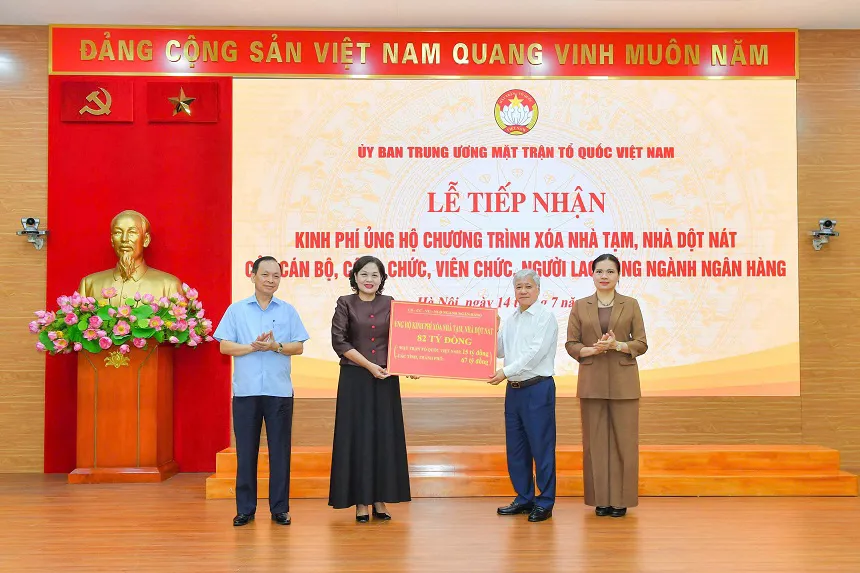
The Vietnam Fatherland Front receives financial support from the banking sector. Photo: State Bank of Vietnam
Earlier, on April 13, 2024, the banking sector donated VND220 billion (US$8.5 million) at the launch of the makeshift housing elimination campaign in the former northern province of Hoa Binh.
The sector also pledged VND1 trillion (US$38.5 million) and provided an additional VND145 billion (US$5.6 million) to support the eradication of unsafe housing in communities nationwide.
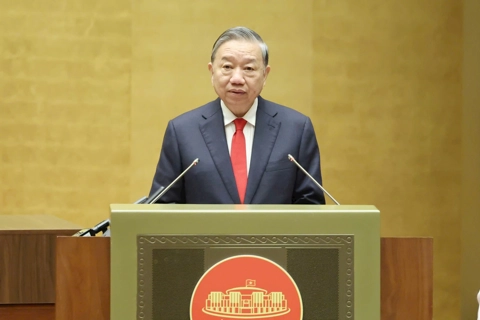
"When each person lends a hand and each family shares a little, a new house becomes not just a shelter, but a symbol of care and community support," said Nguyen Thi Hong, Governor of the State Bank of Vietnam.
Hanoi’s new digital multimodal transport pass allows commuters to use buses and metro with a single card, saving time, reducing costs, and supporting the city’s smart mobility goals.
In addition to outlining the roles and responsibilities of local authorities, the handbook provides citizens with step-by-step guidance on completing land-related procedures under the new system.
The candidates pledge institutional reform, infrastructure upgrades and a stronger focus on science, technology and public services as the capital prepares for the 16th National Assembly term.
As climate risks intensify across Southeast Asia, young people are being called upon to move from awareness to action, harnessing technology, creativity and policy engagement to accelerate environmental solutions.
The three resolutions on education, healthcare reform and cultural development are closely interconnected and mutually reinforcing, all directed toward building a capital that is cultured, civilized, modern and happy.
Developing the state economy and Vietnamese culture forms the twin pillars of a unified development strategy, one strengthening material capacity, the other reinforcing cultural and social resilience.
A central message of the 14th National Party Congress and the 18th Congress of the Hanoi Party Organization (2025-2030) is that people’s happiness must be at the core of development. All policies be grounded in citizens’ legitimate rights and interests, with public satisfaction serving as the ultimate measure of success.
Vietnam has reaffirmed its strong commitment to meeting international standards on tax transparency and information exchange following the European Union's adding Vietnam to its list of non-cooperative tax jurisdictions.
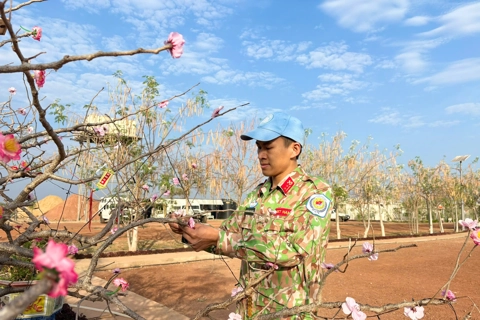
Under the dry winds and red dust of Abyei and Bentiu, mission compounds glow with paper blossoms and steaming banh chung, as each square rice cake carries from Vietnam to Africa a message of solidarity, compassion and enduring cultural identity.