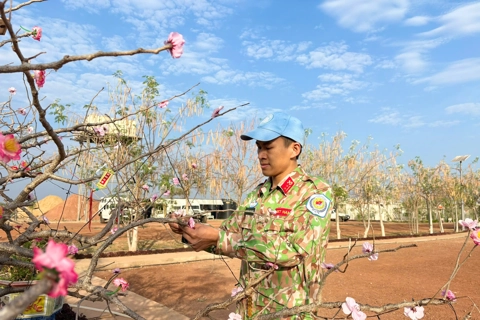
Young soldiers honor Uncle Ho at relic site ahead of Vietnam’s 80th National Day
Around 1,000 soldiers visit the President Ho Chi Minh Relic Site at the Presidential Palace in Hanoi, paying tribute ahead of Vietnam’s 80th National Day parade.
THE HANOI TIMES — The quiet courtyards of the Presidential Palace grounds were filled with solemn footsteps on the morning of August 3.
Around 1,000 officers and soldiers, set to march in Vietnam’s 80th National Day parade next month, bowed their heads in tribute at the Ho Chi Minh Relic Site within Presidential Palace Complex in central Hanoi, where the late leader lived and worked during the final 15 years of his life.
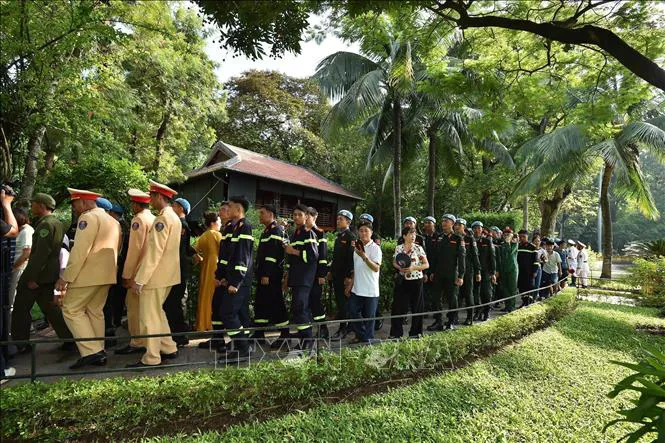
The visit, part of preparations for the September 2 celebrations, offered participants a rare chance to connect with the intimate spaces where President Ho Chi Minh guided the nation through some of its most difficult years.
“We were deeply moved seeing the stilt house, the fish pond, and the everyday objects he used,” said Tran Thi Thu Uyen, a young information unit soldier.
“It reminded us why we are marching to honor his vision of independence and unity,” Uyen told the Vietnam News Agency.
A living legacy ahead of a milestone
This year’s parade marks the 80th anniversary of both the August Revolution of 1945 (August 19, 1945) and National Day (September 2, 1945). The revolution toppled colonial and feudal regimes, paving the way for President Ho Chi Minh to declare independence at Ba Dinh Square on September 2, 1945, establishing the Democratic Republic of Vietnam, the first workers’ and peasants’ state in Southeast Asia.
Eight decades later, the relic site in Hanoi, comprising the stilt house, House 54, House 67, the carp pond, and surrounding gardens, remains a pilgrimage destination for Vietnamese and international visitors alike. Its modest architecture and preserved artifacts offer insight into the austere lifestyle and enduring ideals of Vietnam’s most revered leader.
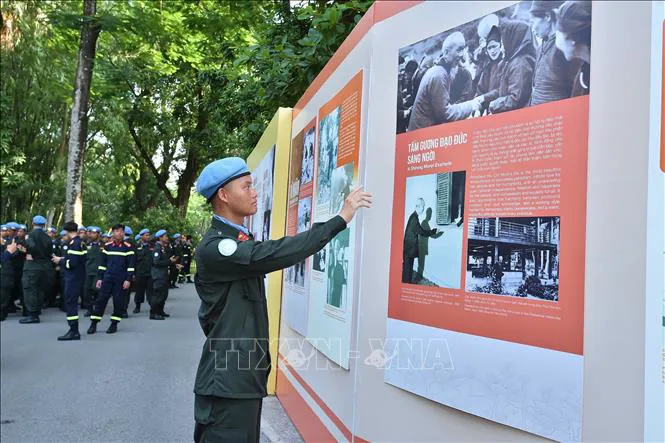
For soldiers like Pham Tien Dat from the southern province of Dong Nai, visiting the site for the first time was both humbling and motivating.
“This is my first time in Hanoi. Marching past Ba Dinh Square on September 2 will be an honor, but seeing where President Ho lived gives the day deeper meaning. It pushes us to train harder despite the heat and long hours,” said Dat.
“As a member of the Public Security force, he has always admired and revered President Ho Chi Minh and strive to follow his example while performing my duties, showing care and compassion for fellow citizens, comrades and colleagues,” he added.
The tribute at the relic site is one of several symbolic events leading up to the national celebration, designed to instill pride and historical awareness in participants. Organizers see these gestures as vital for younger generations of the armed forces, many of whom were born long after the events of 1945.
The significance of the visit also extends beyond symbolism. It highlights Hanoi’s preparations for a parade expected to showcase the combined strength of the armed forces and civilians under the leadership of the Communist Party of Vietnam.
This year’s commemoration will feature both military parades and civic processions through the capital, reflecting eight decades of transformation since independence.
From personal reflection to national pride
The Ho Chi Minh relic site within the Presidential Palace complex is often described as a “red address”, a sacred space that nurtures patriotism and moral values. Over the years, countless delegations have come here to honor the late leader, from schoolchildren and factory workers to foreign dignitaries.
For many visitors, the experience is deeply personal. Standing in front of President Ho Chi Minh’s simple stilt house, surrounded by lush gardens and the sound of rustling bamboo, soldiers often reflect on their own responsibilities.
The visit also underlines the meaning of this year’s celebrations, with a tribute not just to past victories but to the continuing effort to protect national sovereignty and ensure peace. The August Revolution and National Day remain guiding lights for Vietnam’s path toward development and integration.
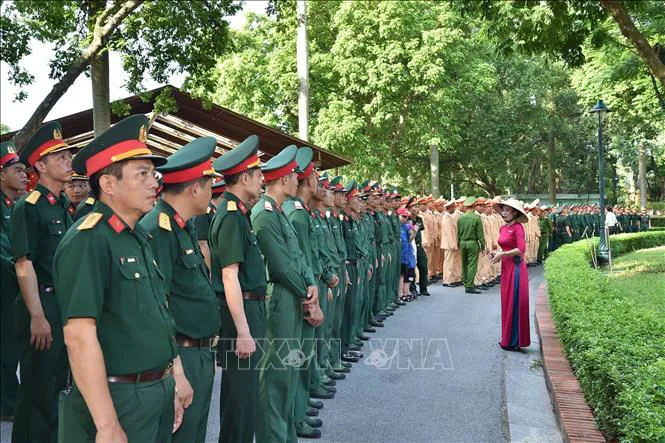
Officers and soldiers listen to a guide recount stories about President Ho Chi Minh.
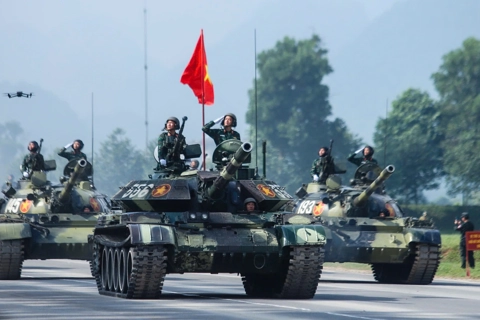
Preparations for the September 2 parade are already in full swing. Rehearsals continue under the sweltering summer sun, with soldiers and civilians training together to ensure precise formations on the historic Ba Dinh Square.
The relic site visit offered a pause from that intensity, allowing participants to recharge emotionally ahead of the milestone event. For young soldiers like Thu Uyen and Tien Dat, it was also a reminder of the human side of history – President Ho Chi Minh, the leader who cooked his own meals, tended his own garden, and dedicated his life to the people.
As Vietnam readies to celebrate eight decades since its declaration of independence, the memory of Uncle Ho continues to unite the nation, not only in ceremony but in the quiet resolve of those who march in his/her honor.