Foreign investors ready to invest big in Vietnam housing
JLL observes that there are hundreds of million dollars waiting to be poured into the market in most segments of real estate.
The urbanization phenomenon in today’s fast-paced world is inevitable, especially in emerging economies. Vietnam’s population has grown rapidly from 66 million in 1990 to 96.5 million in 2019. This makes Vietnam the third most populous country in Southeast Asia after Indonesia and the Philippines.
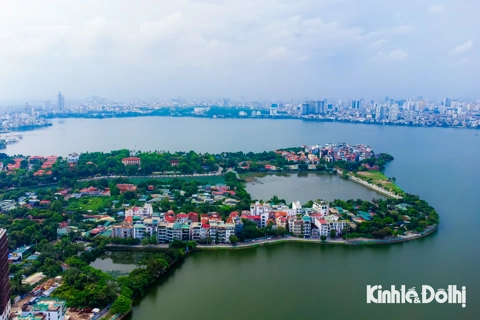
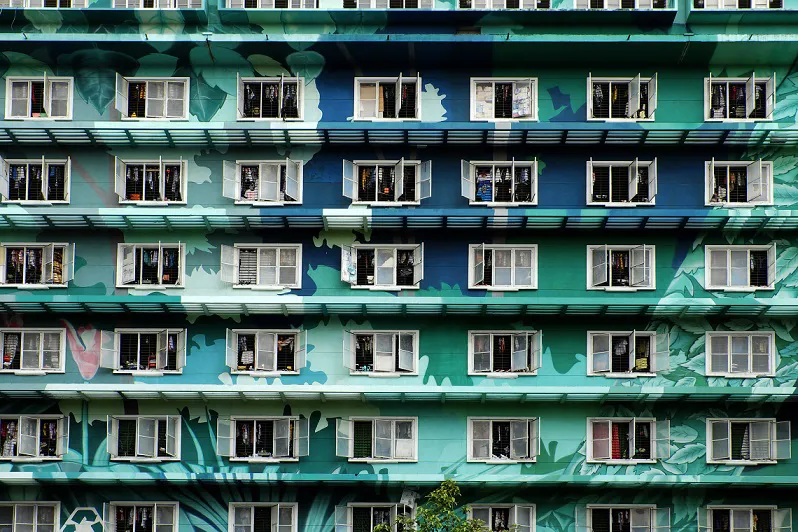
| Illustrative photo |
Whilst the birth rate is low at 2.09, migration from the countryside to urban areas is the key process driving urban population growth. The rural population is attracted to urban areas by employment opportunities, better standard of living, educational facilities, infrastructure, need for status, etc. The World Bank expects Vietnam’s urban population to grow by 2.4% per annum until 2025, the highest in Southeast Asia.
Like other developing nations, Vietnamese cities face an imbalance between the supply of available housing and satisfying the actual demand. This is a marked change from 10 years ago, when the median household size in urban Vietnam was between two and three generations. In order to provide for its inhabitants, a growing city is expected to cater to their basic needs, starting with affordable housing.
According to JLL, the total supply of completed apartments in Ho Chi Minh City and Hanoi as of the fourth quarter (Q4) of 2019 reached 201,707 units and 224,179 units respectively in all segments, equating to the rate of 17 apartments/1,000 people. “This rate is relatively low right now, we should focus on the mass housing market as this is the segment with real demand", according to Mr. Stephen Wyatt, Country Head of JLL Vietnam.
However, the supply of premium and luxury apartment seems abundant, especially when you take into consideration projects under construction. With this, we estimate that Ho Chi Minh City could have close to three prime apartments per 1,000 persons, close to the average in Bangkok, Kuala Lumpur and Manila, but higher than Jakarta. The government is seeking ways to encourage developers to undertake more affordable housing projects to meet the housing needs of the city.
While the general definition for affordable housing includes components such as usable area, price, reasonable occupying expenses, the key factor for this segment, in our opinion, pertains to the size of the habitable units, provision of basic amenities, cost and location of the project. Especially, when it comes to pricing, the rate per square meter should be below USD1,200.
The report ‘The opportunity lies in building homes, 2016’ by JLL shared some developers in Ho Chi Minh City stated that they were making EBITDA margins of 25-30% on prime and mid-end residential projects. Affordable and mid-end residential projects are likely to sell reasonably well given affordability levels. Furthermore, the supply growth in these segments is much lower than premium projects so competition for buyers will be less intense.
Cities today face the issue of diminishing land availability, exaggerated land and real estate price due to population surge, over-burdened and defunct basic infrastructure services, lack of access to basic facilities, and environmental degradation and loss. Land fund remains a major hurdle for most investors. For residential and commercial projects, foreign investors often search for "clean" land (i.e. compensation completion, site clearance, land use fees have been paid, land use right is in place, and good planning). However, those assets are rare as the Vietnamese realty market is still immature and quite local.
JLL observes that there are hundreds of million dollars waiting to be poured into the market in most segments of real estate. There has been a rise in inquiries on affordable housing in Vietnam from countries such as Japan, Korea, Singapore, with an increasing number of groups from mainland China. While many are interested, not so many can overcome the initial challenges that come with doing business in an emerging market. In addition, the Vietnamese real estate market is tightly held and open market offerings in this high-growth, high-potential sector are rare. The accessibility to good assets is quite limited.
Foreign developers that are new to the market should consider partnering with local groups on joint ventures. Establish joint ventures with local partners to enter the market. This have become popular among foreign developers who have strong financial capacity and track record, joining forces with local developers who own land and have strong connection with the local community.
Investors’ interest in the affordable sector did not appear out of thin air, it was largely fueled by consumers’ ongoing demand to buy apartments to live. Most affordable residential projects launched in the past few years have witnessed strong and consistent sale.
Over the next two decades, Vietnam will be in a demographic golden age. Employment in manufacturing and services has increased. A quarter of the population is aged between 10 and 24; the median age is around 30. The Millennial population will be the main drivers for affordable housing in the next few years, especially projects that are within proximity to industrial zones and are connected to major traffic points. This demographic is ready to pay a little extra to get mid-end perks, like better connection to the CBD and live-play-work facilities such as schools, hospitals and parks.
While affordable housing development is critical to alleviate the pressures on cities, designing and implementing these housing solutions across the country need a lot of support from the government. Legislation is, of course, an available option. Measures being floated include quotas to ensure that a certain percentage of units in any development are affordable, and more relaxed planning regulations.
In the coming time, we expect the approval process to accelerate, and the residential market still has the potential for strong growth.