“Green channel” - a key to speed up Vietnam's real estate revival
Experts remain optimistic about the future prospect once the pandemic is fully contained in Vietnam.
As Vietnam is shifting its Covid-19 strategy towards safe and flexible adaptation to the pandemic, experts have called on localities to adopt a single mindset on restriction measures to form a “green channel” for the real estate market to recover.
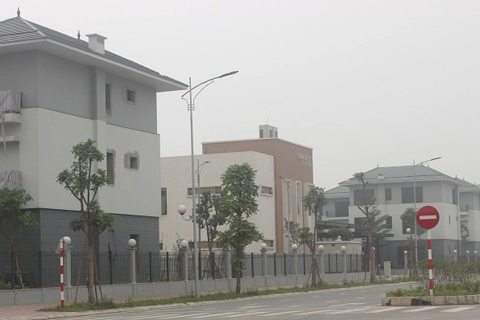
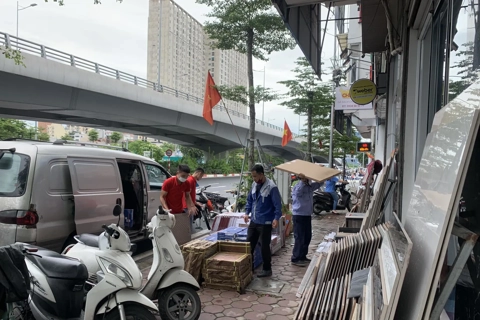
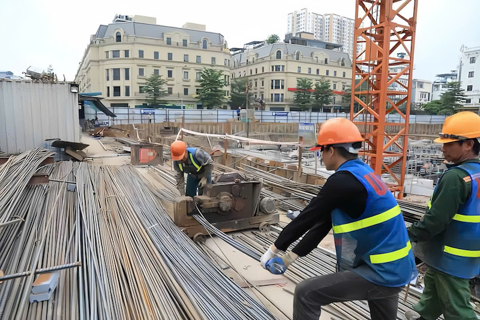
| Real estate projects are on hold due to the Covid-19 pandemic in Hanoi. Photo: Doan Thanh |
.jpeg)
“The pandemic, especially the fourth outbreak, has severely impacted the local economy, with the real estate sector among the hardest hit,” said economist Can Van Luc.
According to Luc, the business community is struggling with the pandemic as statistics revealed the number of businesses temporarily suspending operations rose by 24% during the nine-month period.
Improvements in the Covid-19 situation and the gradual reopening of the economy, however, are seen as a huge relief for the economy overall.
“In a most optimistic scenario, Vietnam’s GDP could expand around 4.8-5%, but more likely the case would be 3.5-4%,” Luc said, but adding it could be a long shot before the real estate market revives again after a long period of non-activity.
“The weak demand and low liquidity are the main factors, not to mention the country is expected to achieve herd immunity by mid-2022,” he added.
Chairman of the Vietnam Association of Construction Contractors (VACC) Nguyen Quoc Hiep noted, for the time being, the most important factor for the market would be instruction on the “green channel” for property firms, which is especially important as localities are using different interpretations of restriction measures.
“This makes it hard for the movement of goods and workers across different provinces/cities,” Hiep told The Hanoi Times.
“In localities divided into zones with different risk levels, construction companies should be allowed to operate in green zones,” Hiep said, noting this is the foremost prerequisite for the market to recover.
While the market is still facing numerous difficulties, experts remain optimistic about the future prospect once the pandemic is fully contained in Vietnam.
This came from the fact that the authorities are working on legal bottlenecks that are hindering market development. Since early 2021, the Government has provided a number of policies, including decree No.54/2021/ND-CP providing measures to assess environmental impacts of real estate projects; decree No.69/2021/ND-CP on the renovation of apartments; decision No.697/QD-NHNN on lending rates for purchase or reparation of social housing.
Industrial properties as the highlight of the market
Vice-Chairman of the Vietnam Real Estate Brokerage Association Nguyen Van Dinh said in a grim picture of the real estate market and lack of new supplies, the absorption rate remained high at 40-60%, with the highlight being industrial properties.
A study from JLL Vietnam backed up such a statement by noting despite the real estate market in the southern region was almost frozen due to the social distancing measures, the occupancy rate at industrial parks in the north went up to 89% in Hanoi, Thai Binh, Vinh Phuc or Phu Tho.
In Hung Yen Province, Hoa Phat launched the expansion of Pho Noi A industrial park with a total area of 93 hectares. Meanwhile, Viglacera completed the site clearance for the Yen Phong 2C industrial park, with the construction progress has reached 70% so far.
Such projects are taking total industrial lands for rent in the north to around 9,900 hectares.
“The north is witnessing a new wave of investment into a new model of complex industrial properties,” Director of JLL Vietnam’s Market Research Department Trang Bui said.
Trang said Korea Land & Housing (LH) is planning to invest in Dai Hung complex industrial project with investment capital of $500 million in Hai Duong Province; IIDICO expanding the Vinh Quang industrial complex in 495 hectares in Haiphong City; or Viglacera’s proposal of a complex of industrial-urban-services in Yen Bai Province in 496 hectares.
“In a low-interest environment, the real estate market remains an attractive and long-term investment option with a profitable rate of 9-12% per annum. Meanwhile, the Government is pushing for public investment, including transportation infrastructure, which is seen as a big push for the market,” finance expert Nguyen Hung Thanh told The Hanoi Times. “The issuance of regulation on environmental impact assessment could address the legal bottleneck concerning the real estate market and ensure a consistent legal system in the investment environment. With such a foundation, the authorities would be in a better position to assess the environmental impacts of development projects and make sure they are in line with sustainable development goals,” Vu The Hung at the Environment Impact Assessment and Appraisal Department of the Ministry of Natural Resources and Environment told The Hanoi Times. |