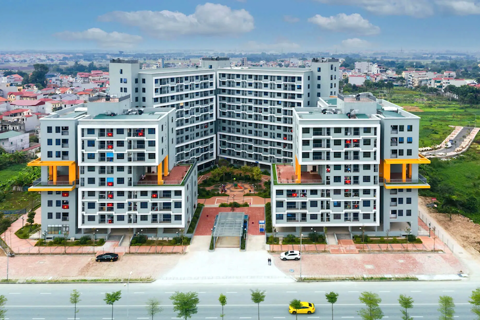
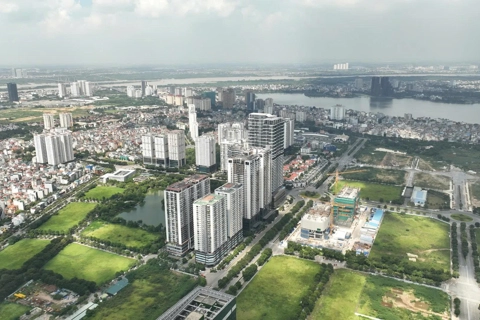
Hanoi apartment market heats up as investors dominate
Between 2026 and 2027, Hanoi’s apartment market is projected to welcome approximately 46,600 units, mostly located outside the central core.
THE HANOI TIMES — Expectations of rising property values, fueled by ongoing infrastructure upgrades and rapid urbanization, continue to boost investor confidence and enhance the appeal of Hanoi’s real estate market, as shown in Savills' report.
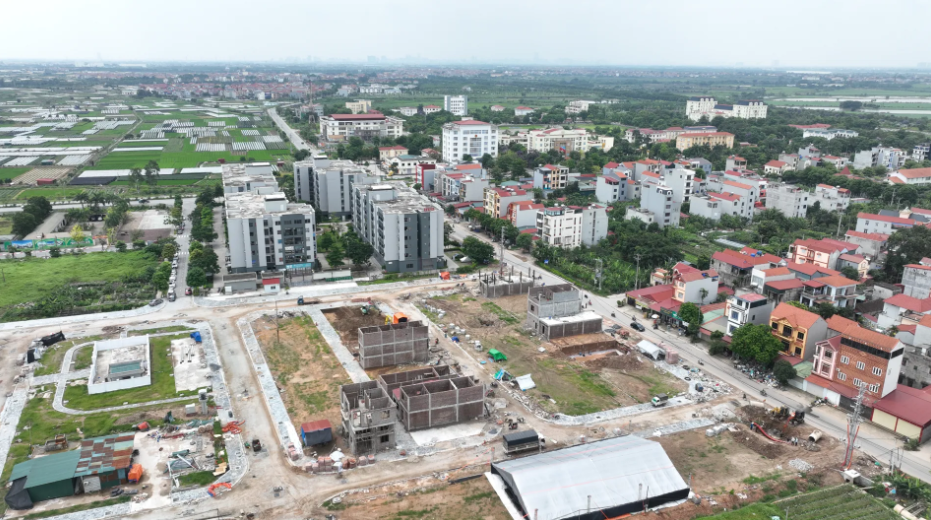
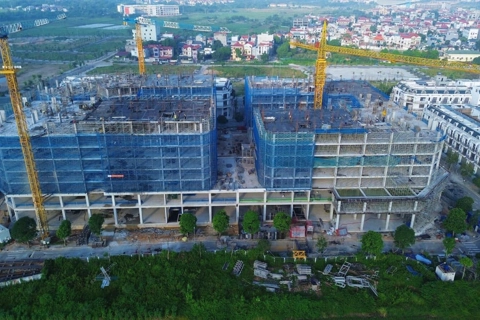
A construction site in Hanoi. Photo: Pham Hung/The Hanoi Times
Market prices on the rise
According to the report, Hanoi’s apartment market in the second quarter (Q2) of 2025 saw a sharp rise in both new launches and overall supply, yet prices continued to climb.
The city recorded 8,000 newly launched units during the quarter, bringing the total new supply for the first half of the year to approximately 14,900 units, rocketing 121% from the same period last year.
Despite the surge in supply, the average primary price remained high at VND91 million (US$3,480) per square meter, reflecting a 40% year-on-year increase. Apartments priced above VND4 billion ($153,000) accounted for 67% of the total supply. Meanwhile, the market remained largely void of primary inventory in the sub-VND2 billion ($76,400) range.
In terms of sales, Savills recorded around 5,200 successful transactions in Q2. While this figure was down from the previous quarter, it still represented a slight year-on-year increase. During the first half of 2025, an estimated 13,100 units were sold, up 26% compared to the same period last year, with 99% of these transactions in the mid- to high-end segments (Grade A and B).
According to Nguyen Van Dinh, Chairman of the Vietnam Association of Realtors (VARS), the supply of affordable commercial apartments in Hanoi is becoming increasingly scarce, while mid-range options are gradually disappearing, limited mostly to a few older condominium projects and potentially vanishing altogether in the near future.
Even newly launched high-end units priced below VND60 million ($2,292) per square meter are now rare.
“This imbalance is pushing the market into a severe supply-demand mismatch, driving up selling prices and placing the dream of homeownership further out of reach for most urban residents, including those with upper-middle incomes,” Dr. Dinh warned.
Meanwhile, Do Thu Hang, Senior Director of Research and Advisory at Savills Hanoi, attributed the continued rise in average prices to the premium nature of the new supply. Most newly launched projects were located in desirable areas and positioned in the high-end segment, she explained.
“Given scarce available land in central locations and rising development costs, many developers focus on maximizing commercial value,” Hang said.
Tran Van Binh, Secretary General of VARS, noted that apartment prices in Hanoi are expected to continue rising in the short term, driven by high input costs and sustained profit expectations from investors.
"A significant portion of investors currently face little financial pressure, including limited exposure to borrowing costs, which reduces any immediate incentive to lower asking prices," Binh said.
On the contrary, expectations are even trending upward amid low interest rates, an influx of cheap capital, and strong public investment initiatives. These factors, combined with the ongoing shortage of reasonably priced housing supply, continue to support upward price momentum in the market.
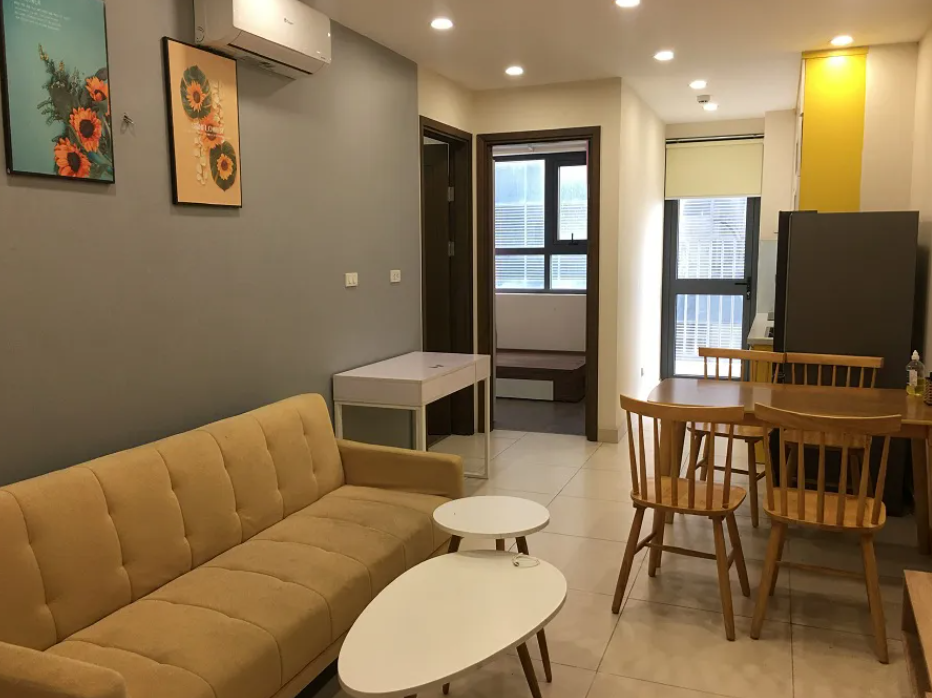
Inside an apartment for sale in Hanoi. Photo: Le Tam/The Hanoi Times
Investors continue as main drivers
Regarding buyer demographics, Hang from Savills noted that end-users were still present, but investors continued to dominate market activity.
“High apartment prices narrow access for real buyers. Many of the newly launched projects, located far from the city center, force buyers to invest in the future. It has positioned investors as the main drivers of total transactions,” she explained.
Meanwhile, some buyers are purchasing to use the property upon completion to flexibly switch to investment purposes if market conditions change. This dual-purpose approach reflects a growing trend among buyers to stay adaptable amid market uncertainty.
Savills observed that investor sentiment remains upbeat, particularly toward projects in strategic locations that benefit from existing or planned infrastructure. These factors continue to support price levels at well-positioned developments and enhance long-term investment value.
However, Hang cautioned that profit expectations should be carefully evaluated. In projects with ample supply and already high selling prices, achieving targeted returns may be challenging, especially if investors need to exit quickly or shift focus to other segments.
Still, for those with a long-term outlook, particularly in areas experiencing rapid urbanization and with room for further development, opportunities remain promising.
By the end of this year, around 11,500 units are expected to be launched, including the majority of the Grade A and B segments, resulting in limited product diversity in the short term.
From 2026 onward, the landscape is expected to shift. Once a series of pilot projects completes legal procedures, a significant supply increase is anticipated. Between 2026 and 2027, Hanoi’s apartment market is projected to welcome approximately 46,600 units from 43 developments, most of which will be located outside the central core.
This influx may prompt a slight downward adjustment in average prices. Still, Hang noted that projects in areas with limited land, strong demand, and reputable developers are likely to maintain their pricing, or even see further gains.