Hanoi breaks ground on Ring Road No.4
The investment in the construction of Ring Road 4, located in the Capital Region, will create new opportunities for development in the entire region, said Prime Minister Pham Minh Chinh.
Groundbreaking ceremonies for the Ring Road 4 project were held today [June 25] at four sites in Hanoi and the capital city's neighboring provinces of Hung Yen and Bac Ninh.
The project to build ring road 4 through the capital region was approved by the Prime Minister in 2011. The proposed route covers 14 districts in Hanoi, Hung Yen and Bac Ninh provinces.
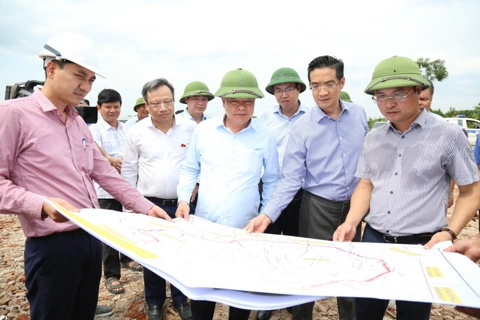
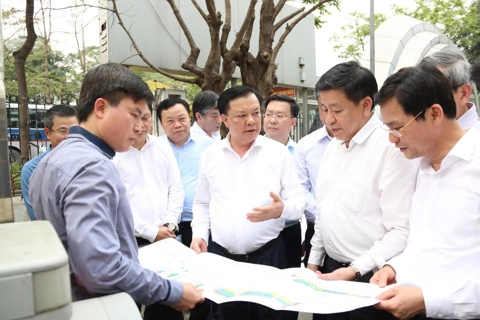
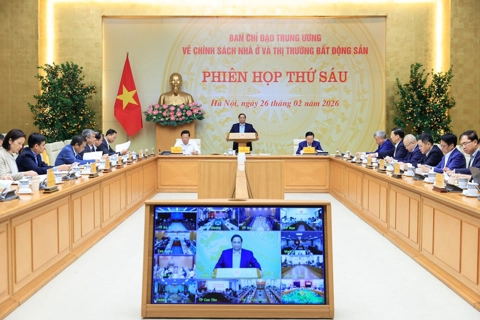
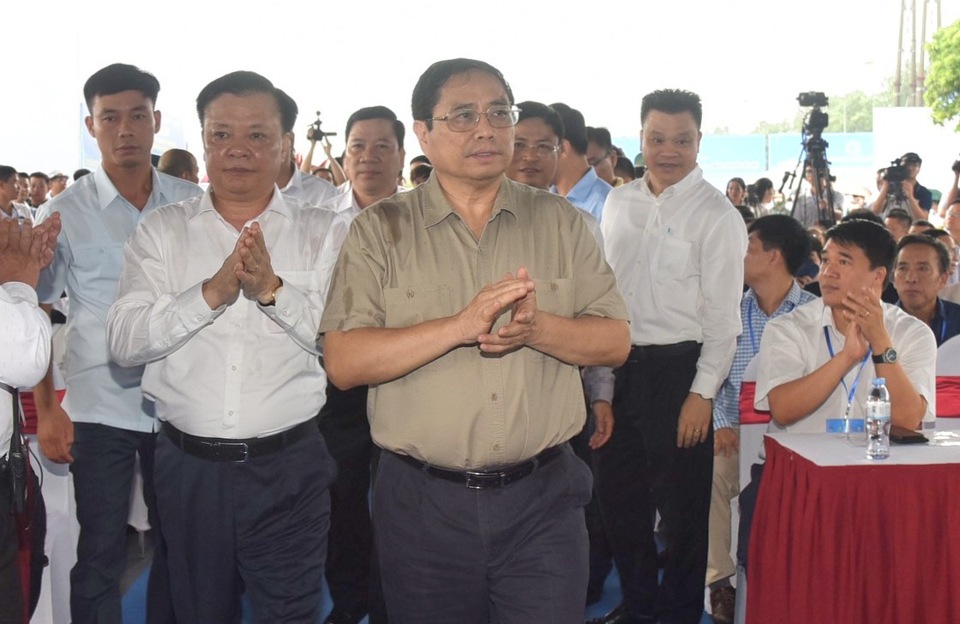
| Prime Minister Pham Minh Chinh and Hanoi Party Chief Dinh Tien Dung attend the project's groundbreaking ceremony in Song Phuong Commune, Hoai Duc District, Hanoi. Photos: Thanh Hai/The Hanoi Times |
During the ceremony, Tran Sy Thanh, Chairman of the Hanoi People's Committee, highlighted the proactive and diligent efforts of Hanoi, Hung Yen, and Bac Ninh provinces following the project's approval of the investment policy.
Thanh stressed that Hanoi took immediate action by organizing meetings with relevant localities to establish a special steering committee to oversee the construction of Ring Road 4.
"With strong determination and the synchronized involvement of the entire political system at all levels, as well as the support and consensus of residents, the Ring Road 4 project in the Hanoi Metropolitan Area has now met all the necessary conditions to start construction and will meet the scheduled timeline of before June 30, 2023," Thanh said.
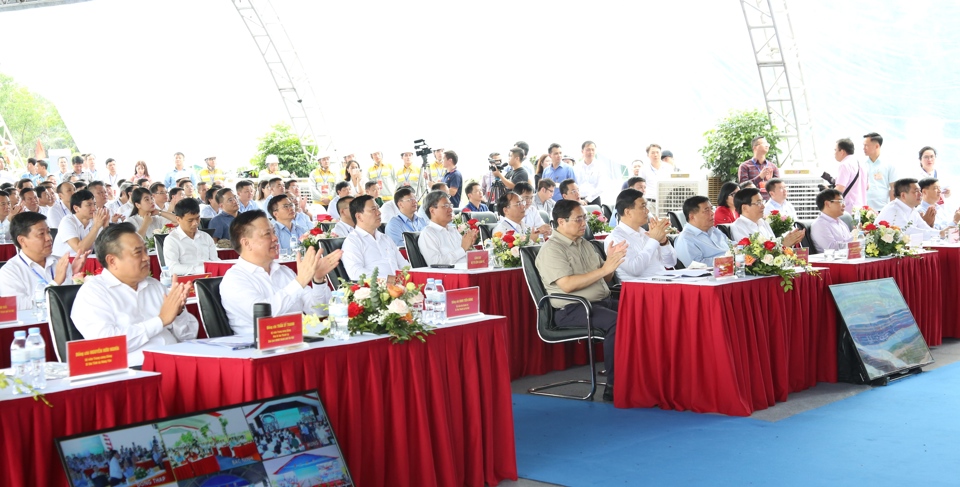
| Delegates attending the ceremony. |
The Mayor also highlighted that the land clearance process for the entire route is already over 80% complete, with 84% in Hanoi.
Hanoi is committed to providing leadership, mobilizing the collective strength of the entire political system, and gaining consensus and support from the people in the execution of the project.
The city recognizes that the implementation results of the project will serve as a yardstick for measuring the leadership capacity, direction, and management of Party committees and agencies at all levels.
In addition, Hanoi is fully aware that the successful implementation of this project is crucial to maintaining its reputation.
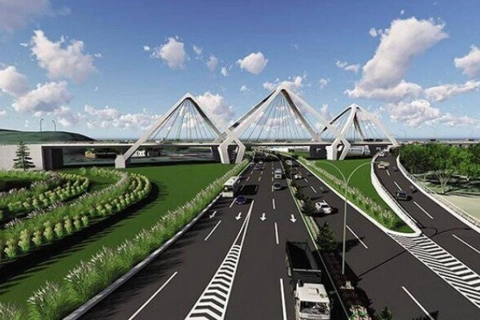
| Project design. |
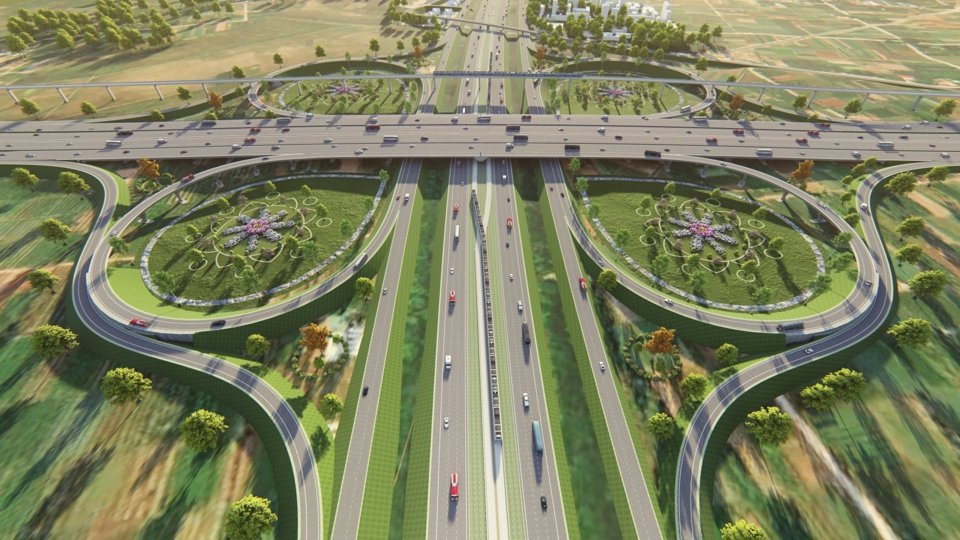
According to Thanh, Hanoi intends to mobilize substantive and profound participation by encouraging bold thinking, action, and a sense of responsibility among Party committees, government agencies, the Fatherland Front, and socio-political organizations at all levels from the city to the grassroots to accomplish this task.
In addition, Hanoi will strengthen decentralization and empowerment, especially at the district, commune, and ward levels, to reduce bureaucratic bottlenecks and ensure that decision-making is closer to reality and more responsive to people's needs.
| Chairman of the Hanoi People's Committee Tran Sy Thanh. |
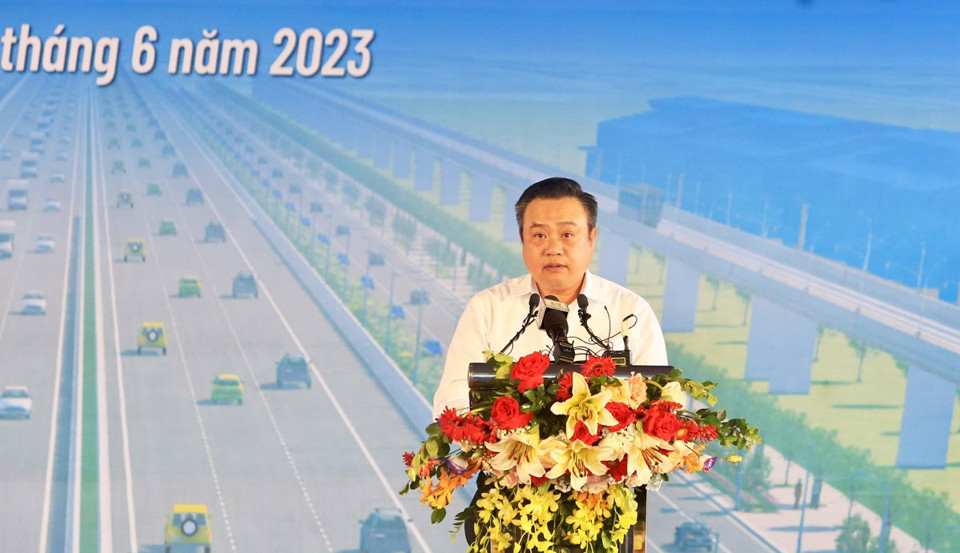
Thanh added that the city has already delegated authority to districts to handle land clearance, compensation, and resettlement assistance. Regular inspections, follow-ups, and prompt resolution of issues during the project implementation will be carried out. The districts have signed agreements that accelerate daily progress and minimize the time required to complete administrative procedures related to the project.
| Delegates at the ceremony. |

Separating the site clearance process as an independent project is another important aspect, he continued.
Based on practical experience from previous projects in the area, Hanoi recognizes that site clearance is a critical stage and focal point. As part of the preparation of the project's construction documents, the city has proposed to treat site clearance as a separate project. This will allow compensation, assistance and resettlement activities to be decoupled from specific technical considerations and will allow site clearance to begin immediately upon approval of the red-line demarcation, he said.
Prime Minister Pham Minh Chinh emphasized the significance of strategic infrastructure development, particularly in the transportation sector, which has been identified as one of the three key areas for socio-economic advancement.
This initiative is currently being actively implemented throughout the country, he said.
| Prime Minister Pham Minh Chinh addresses the ceremony. |
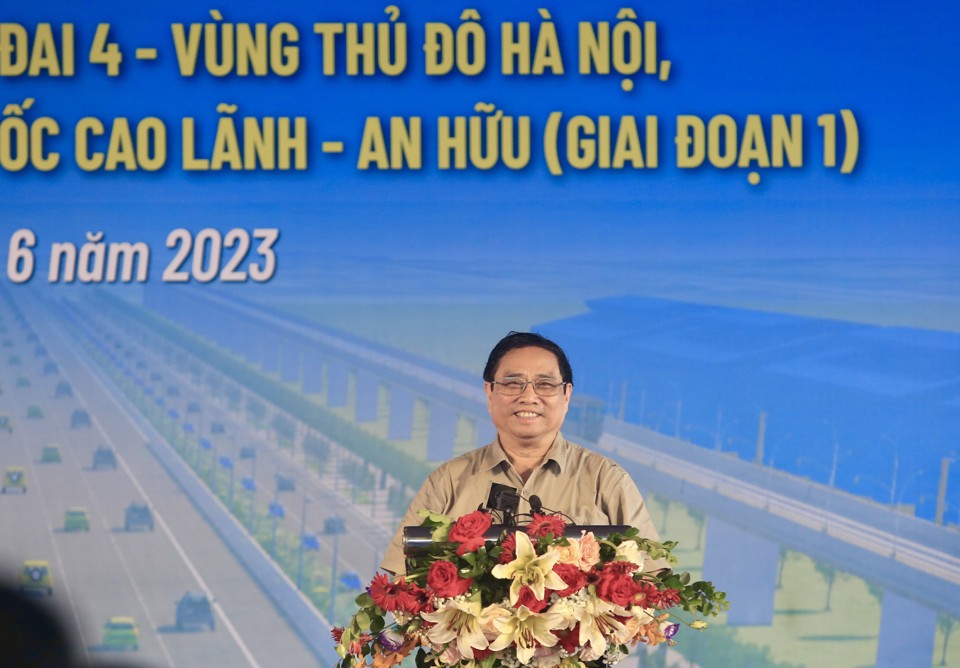
Chinh noted the target set for 2021 to 2025 is to construct 3,000 kilometers of expressways, which is twice the amount built in the past 20 years. Since the beginning of the Government term 2021-2025, substantial progress has been made, with 3,470 kilometers of highways already under operation, construction, or initiation. By maintaining a strong determination, increasing efforts, and taking decisive actions, it is possible to achieve the set goal by 2025, Chinh said.
"The investment in the construction of Ring Road 4, located in the Capital Region, will create new opportunities for development in the entire region, particularly benefiting Hanoi and the provinces of Hung Yen and Bac Ninh, through which the route passes," Chinh said.
Prime Minister Pham Minh Chinh also emphasized that the groundbreaking ceremony marked the first step towards success and highlighted the magnitude of the upcoming tasks that lie ahead.
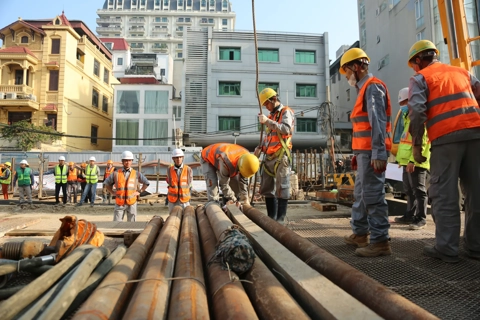
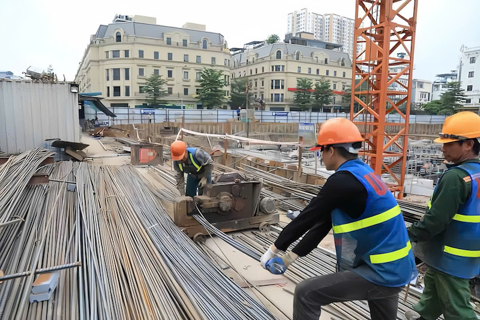
| Construction machinery and equipment ready for construction. |
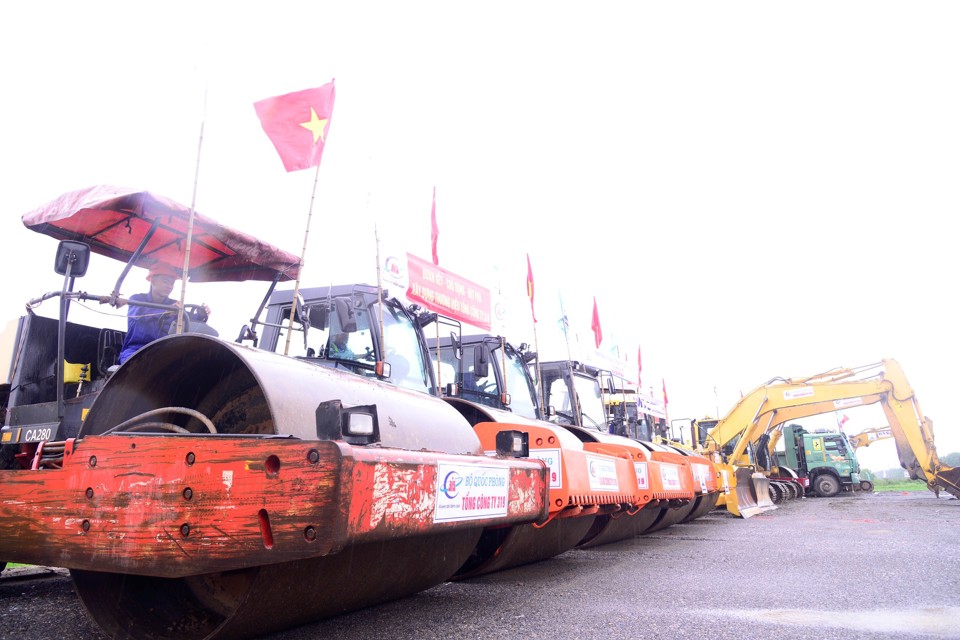
The Ring Road 4 project has a total length of 112.8 km and is initially estimated to require a total investment of VND85,813 billion. Substantial progress is expected to be made by 2026 and the project is expected to become operational in 2027. The project is divided into seven different component projects, which will be implemented independently. In addition, the National Assembly has granted specific mechanisms to facilitate investment capital, implementation, hiring contractors on a non-competitive basis, and managing the utilization of materials for the project. In Hanoi, work on the Ring Road 4 - Capital Region project has started at four designated sites: Starting Point No. 1 is located at the primary bridge intersection of Ring Road 4 and Thang Long Boulevard (at Km28+900 of Ring Road 4, corresponding to Km12+600 of Thang Long Boulevard) in Song Phuong Commune, Hoai Duc District. Starting point No. 2 is located at the intersection of Ring Road 4 and National Highway 2 (at Km1+445) in Thanh Xuan commune, Soc Son district. Starting point No. 3 is located at the intersection of the South Axis (at Km45+700) within the territory of Tam Hung Commune, Thanh Oai District. Starting point No. 4 is at the intersection of Ring Road 4 and the old National Highway 1A (at Km52+600 of Ring Road 4, corresponding to Km190+270 of National Highway 1A) in Van Binh commune, Thuong Tin district. |