Hanoi lifts barriers to social housing access
Expanding access for informal workers would allow developers to sell or lease the available stock more quickly, avoiding waste.
THE HANOI TIMES — The Hanoi People’s Committee is inviting public feedback on a draft social housing management policy that would authorize commune-level authorities to verify the income of low-paid applicants without labor contracts, thereby easing eligibility checks.
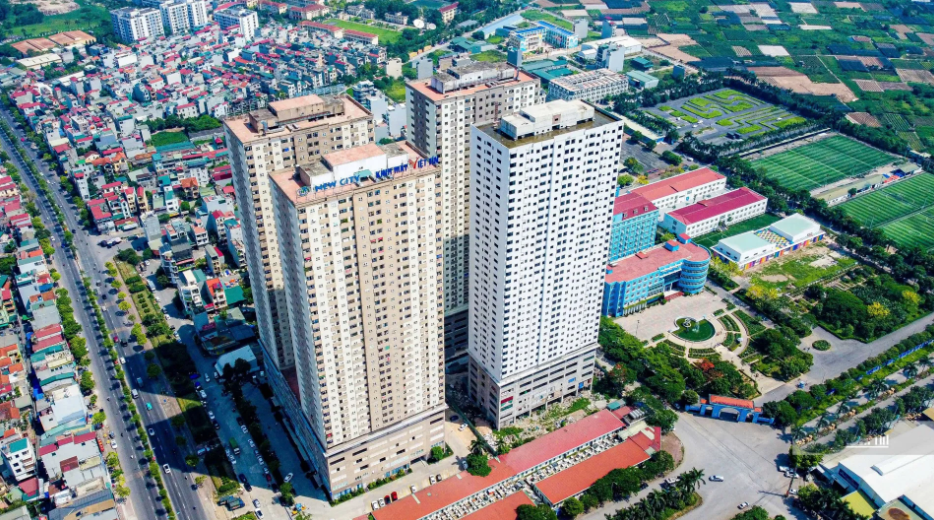
AZ Thang Long Social Housing Complex in Hoai Duc, Hanoi. Photo: Hai Linh/The Hanoi Times
Addressing bottlenecks
According to the Department of Construction, Hanoi has made social housing a core pillar of its urban welfare strategy in recent years. The 2021–2025 plan targets 6.8 million square metres of social housing floor space, or around 70,000 units, to meet demand from low-income residents, industrial park workers, and part of the civil service.
By mid-2025, more than 30 projects providing about 15,000 units had been completed, with nearly 20 more under construction. Despite the new supply, some projects suffer low occupancy mainly due to complex approval procedures and stringent income verification requirements.
To fix these issues, the city is working to expand supply, broaden eligibility criteria, streamline procedures, and improving surrounding infrastructure.
A draft decision on the management of social housing sales, leasing, and lease-purchases is now open for public comment.
One of the most notable proposals concerns applicants without labor contracts or social insurance. These individuals would self-declare their income, while commune-level authorities would confirm the information using actual local conditions and community input. Applicants would bear full legal responsibility for the accuracy of their declarations, and commune authorities would verify based only on available evidence in the locality.
One of the key proposals concerns applicants without labour contracts or social insurance, who would self-declare their income, while commune-level authorities confirm the information based on actual conditions and community input.
Applicants would bear full legal responsibility for the accuracy of their declarations, while the commune authorities would verify based on available evidence in the locality.
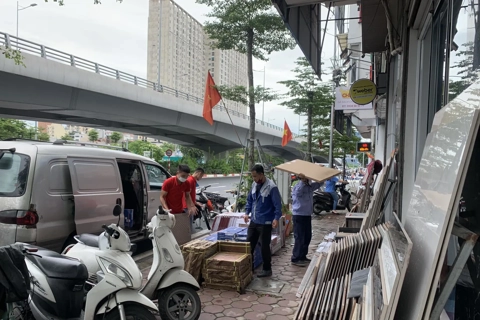
The Department of Construction views this measure as a way to remove a long-standing bottleneck that has excluded many informal workers, such as street vendors, motorcycle taxi drivers, and domestic helpers, from accessing social housing despite genuine need.
Cautious in policy implementation
Professor Dang Hung Vo noted that verifying income directly at the commune People’s Committee can reduce intermediary steps, eliminate complex paperwork, and ease the workload for the Department of Construction and project developers.
In reality, many suburban developments in Hanoi have faced sluggish sales due to prolonged approvals or procedural issues. Expanding access for informal workers would allow developers to sell or lease the available stock more quickly, avoiding waste.

A newly built social housing complex in Hanoi. Photo: Doan Thanh/The Hanoi Times
“If this new regulation is implemented in practice, it will address the needs of thousands of vulnerable groups who need accommodation. The involvement of commune-level authorities in the verification process becomes more humane than rigid documentary requirements, as they are at the closest government tier that understands local living conditions and incomes,” Vo told The Hanoi Times.
However, lawyer Trinh Huu Duc of the Vietnam Lawyers Association cautioned that if citizens self-declare their income and bear legal responsibility while the commune only certifies the information provided, the verification process could become superficial, with no accountability for the certifying authority.
Income from activities such as street vending, ride-hailing, and seasonal work is often volatile and leaves few transaction records, making it difficult to verify. Even though commune officials are close to residents, they may still lack reliable evidence, which could lead to subjective approvals or decisions based on personal relationships.
“Without clear guidelines and transparent inspection procedures, income verification could be misused, overlap with time-consuming and costly post-allocation checks, or be complex if violations are found,” Duc told The Hanoi Times.
Assoc. Prof. Tran Dinh Thien said that to make regulation becomes a real breakthrough, Hanoi should verify criteria and specify bases for certification, such as duration of residence, occupation, living expenses, and utility bills, along with using data, linking population, insurance, and tax records with commune offices to minimize errors and fraud.
Random or periodic inspections of certified applications should be conducted to ensure accuracy, while local officials should receive training on assessing informal income. Strict penalties are needed for false declarations or wrongful certification.
“Some localities, such as Ho Chi Minh City, have confirmed residency while inferring income from electricity and water bills or bank records. Hanoi could adopt this model, using the national population database and tax and insurance systems to simplify the process and reduce subjective verification risks,” Thien told The Hanoi Times.
He stressed that allowing grassroots authorities to verify informal workers' income could resolve a long-standing challenge. To turn this proposal into a genuine step forward, Hanoi must ensure transparency to make fair and effective implementation.