Hanoi schools prepare subsidized lunches for next year
With one month left before the new academic year, schools in Hanoi are gearing up for a lunch subsidy program to ensure that such a meaningful kind of social welfare is well-delivered.
THE HANOI TIMES — Primary schools across Hanoi are finalizing the list of students eligible for the city’s new lunch subsidy program, set to launch with the 2025–2026 school year on September 5.
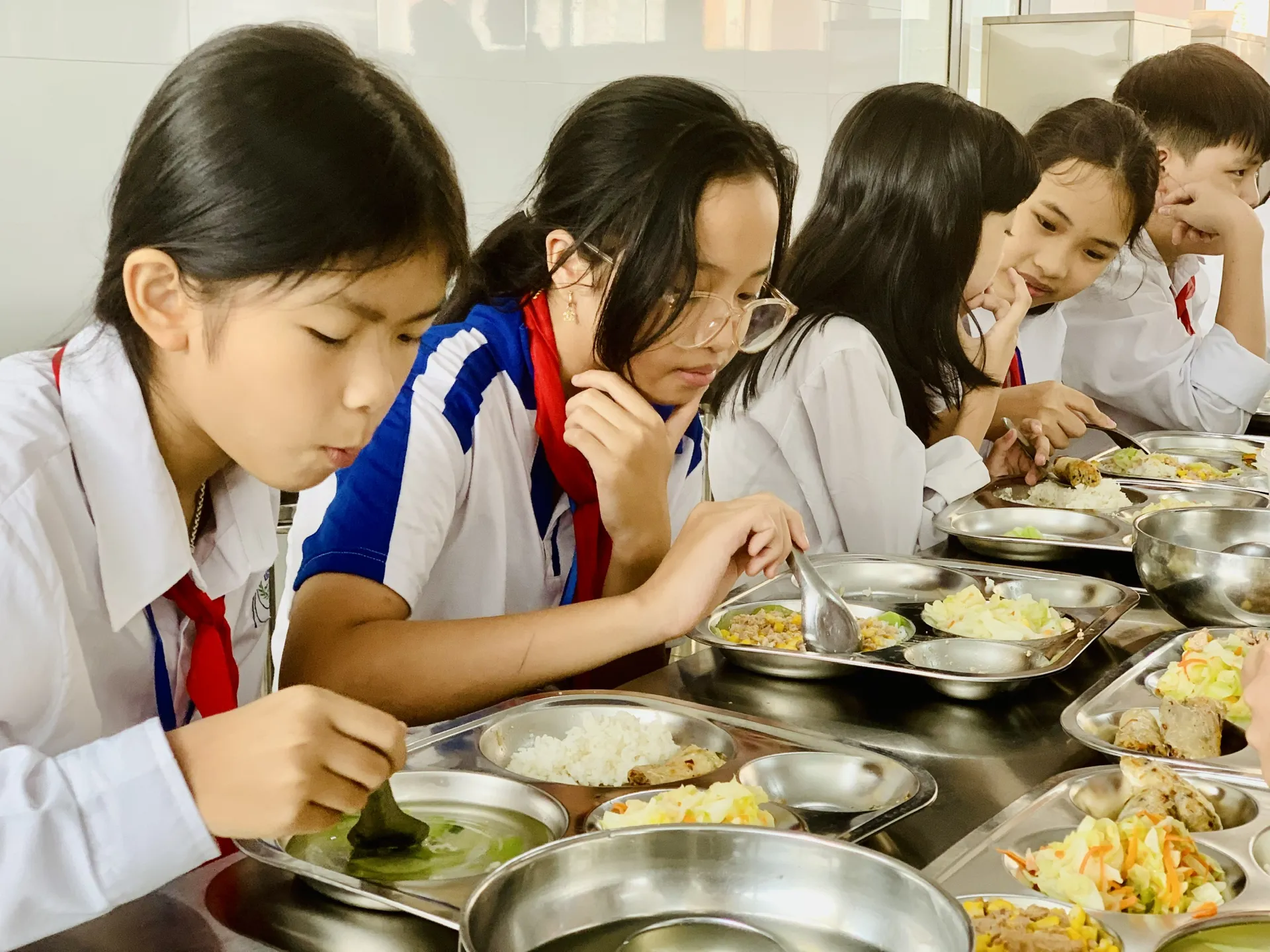
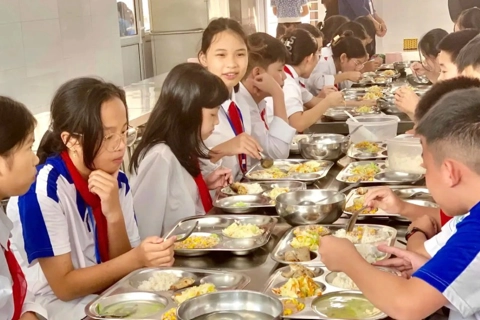
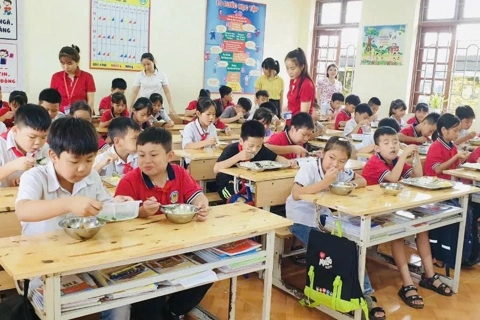
Students in Yen Nghia Ward, Hanoi, have lunch at school. The city’s new lunch subsidy program will begin in September 2025.
At Thai Thinh Primary School in Dong Da Ward, nearly every class has completed registrations for school lunches.
Only a few dozen out of nearly 2,000 students have not signed up, as they live close to school and can go home for lunch.
In Long Bien Ward, Dai Doan Ket Primary School has seen almost full registration, with only a few still undecided or without a current need for the service.
Registration began in early August as students returned from summer break. Schools have informed parents of the new policy and guided them through applications.
The schools will then complete and submit the lists of beneficiaries to local education offices for budget approval from the city government.
The lunch subsidy program was approved by the Hanoi People’s Council on July 9.
Under the policty, every student of 23 primary schools located in mountainous communes and the alluvial islets of the Red River will receive VND30,000 (US$1.14) per day for lunch.
Those living in other areas of Hanoi with better conditions will receive VND20,000 ($0.76) per day per student.
If the agreed meal cost exceeds the subsidy, parents will pay the difference, but every meal must have a minimum value of VND30,000 ($1.14) to ensure nutritional standards.
The scheme will be implemented in two phases: from September 5 to December 31, 2025, and from January 1, 2026, to the end of the school year in May.
Hanoi may spend VND3 trillion ($114.4 million) on the program for the 2025-2026 academic year. Beneficiaries are estimated to reach approximately 768,000 students in both public and private schools.
Pham Minh Thao, Principal of Thanh Cong B Primary School in Yen Nghia Ward, called the policy humane and practical.
Located in a working-class neighborhood, the school has seen families struggle in the past to pay for meals on time.
"With the new VND20,000 ($0.76) daily subsidy, parents will now only pay VND15,000 ($0.57) while maintaining the same menu and nutritional standards," said Thao.
For Nguyen Mai Anh, a parent in Tay Mo Ward, the policy offers welcome relief. She calculated that her family will save VND1.68 million ($64) over the next four months.
“With living costs rising, this support eases our financial burden. Knowing the meals are safe and nutritious also reassures us when our children stay at school for lunch,” she said.
Another Tay Mo parent, Thuy Linh, urged authorities to make the supplier selection process public and transparent, with proper inspections to guarantee quality.
In Cua Nam Ward, parent Tran Tuan Anh noted that in the past, parents could monitor school meals directly.
“Even though the city is now covering lunch costs, parents should still be involved in selecting suppliers to ensure quality,” he said.
Former National Assembly deputy Bui Thi An said that the policy ensures fairness for all students and reflects the State’s commitment to caring for the younger generation.
She urged the city to ensure food is nutritious, age-appropriate, and clean, even if that means paying more for better ingredients.
Food safety on focus
As the school year begins, Hanoi authorities and schools are stepping up efforts to ensure clean and safe school kitchens.
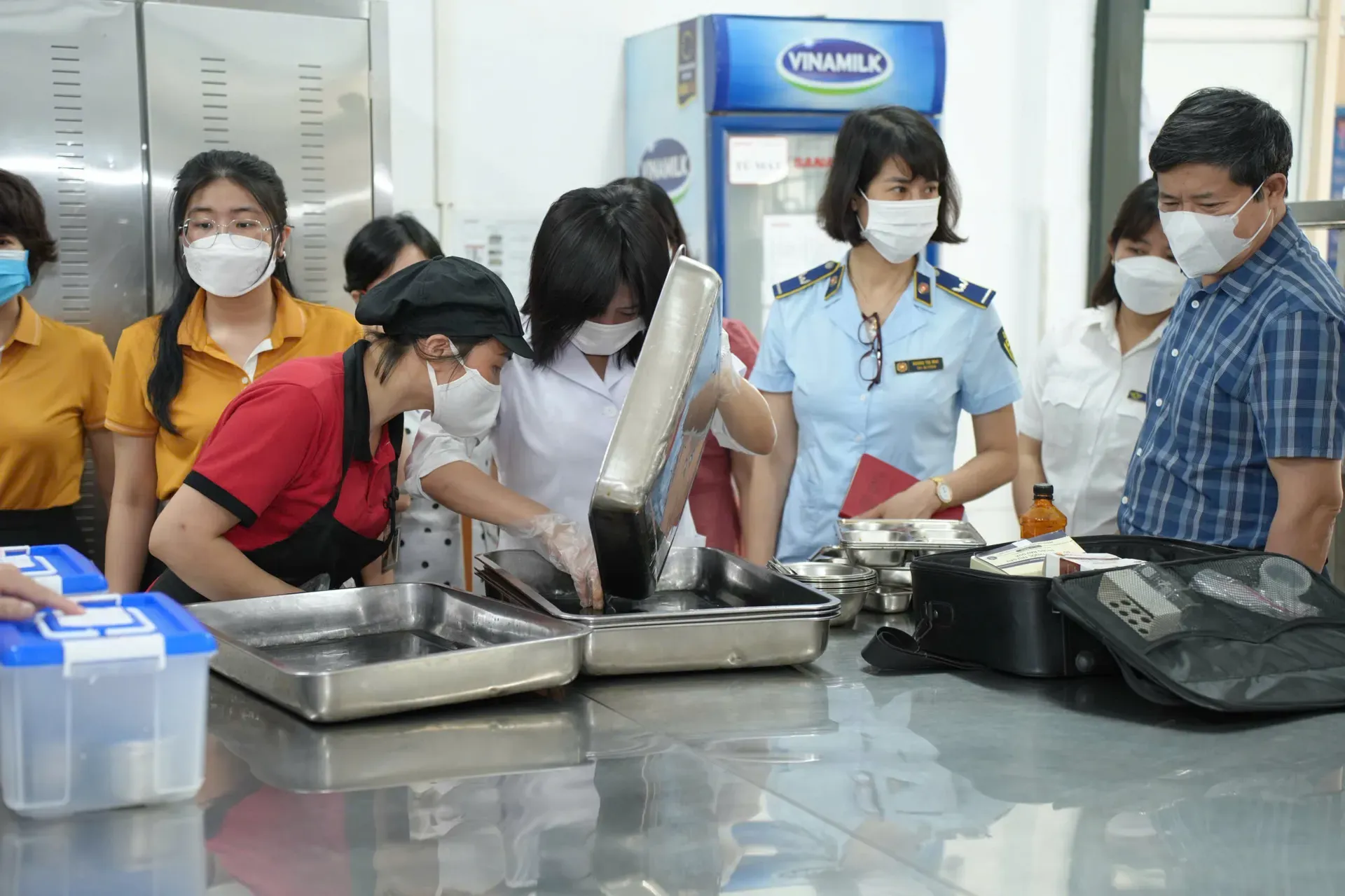
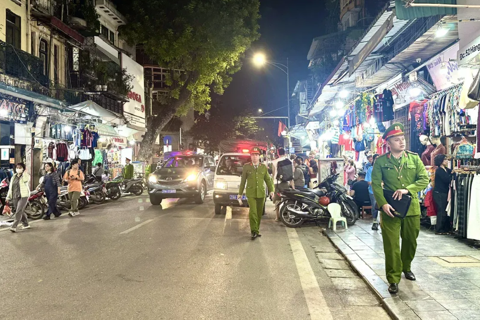
Local authorities inspect a school kitchen in Hai Ba Trung Ward. Photo: Kinh te & Do Thi Newspaper
An stressed that principals must take responsibility for selecting suppliers, and allowing parents and social organizations to participate in oversight.
She also called for strict oversight to prevent mismanagement and demanded clear traceability of the raw foods.
Principal Pham Minh Thao said most schools work with suppliers chosen by ward People’s Committees.
Nutritionists prepare menus, which are then reviewed by a board including school leaders, teachers, and parents, she said.
According to the principal, the school always checks ingredient origins, invites parents to visit meal preparation facilities regularly, and instructs them to check food labels and origins, ensuring meals are both safe and nutritious.
Acting Director of the Hanoi Department of Health Nguyen Dinh Hung said the city has over 3,500 collective kitchens in schools, nearly 7,000 street food vendors located around schools, and thousands of canteens in factories, industrial parks, hospitals, and areas near dormitories and bus stations.
In the first half of 2025, authorities carried out 4,200 inspections, finding 68 school kitchens violating hygiene rules and issuing fines totaling over VND2.3 billion ($87,700).
Around 20% of kitchen staff failed to meet personal hygiene standards, and over 70% of street food vendors sold products with unclear origins.
Nguyen Quang Trung, Deputy Head of the Hanoi Food Safety and Hygiene Sub-Department, said that many kitchens are small-scale, mobile, and lack consistent oversight.
Some fail to keep proper invoices, hindering traceability, while local authorities in some areas have been slow to address violations. Meanwhile, penalties remain weak, with no requirement for regular testing, leaving room for fraud, while traceability systems also face difficulties due to limited use of digital technology.
Consumers, including students and parents, often choose cheaper food without considering safety, raising the risk of food poisoning.
Hung said that the Health Department will oversee all school kitchens and food vendors near schools, close illegal kitchens, increase surprise inspections, publicly name violators, and suspend operations for repeat offenders.
Suppliers will need QR codes for traceability, and large kitchens will be fitted with surveillance cameras, he said, adding that local authorities will be held accountable for enforcement.
Local People’s Committees must take part in managing, inspecting, and penalizing violators, as well as controlling street vendors near school gates, Hung said.
At the school level, principals and companies must sign commitments, supervise food inspections, keep samples, and make all ingredient invoices transparent, he added.
Do Manh Hung, Deputy Head of the Food Poisoning Surveillance and Communications Division, said that kitchen owners and companies must attend mandatory annual training and commit to full traceability.
He proposed establishing “self-monitoring” criteria for kitchen owners and linking them to local government oversight.
Hung also called for public awareness campaigns, including illustrated leaflets, videos on identifying safe food, and extracurricular sessions on food safety for students.
Neighborhood groups and women’s unions should help monitor compliance, set up community safety teams, and encourage residents to report violations via hotlines, he added.