14TH NATIONAL CONGRESS OF THE COMMUNIST PARTY OF VIETNAM
Log in
Property

Hanoi to build 13 resettlement areas for Ring Road No.4 project

The city expects to complete the construction of the resettlement areas in 2024, with a total investment capital of VND13.36 trillion (US$563 million).

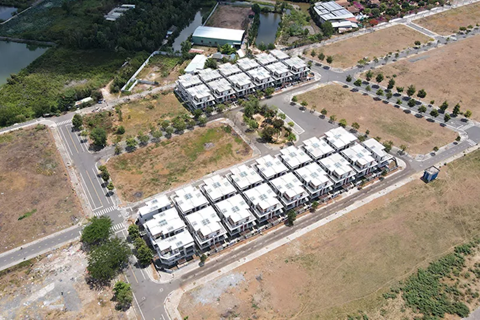
Hanoi plans to build 13 resettlement areas for affected households under the Ring Road No.4 project with total investment capital of VND13.36 trillion (US$563 million) financed by central and local budgets.

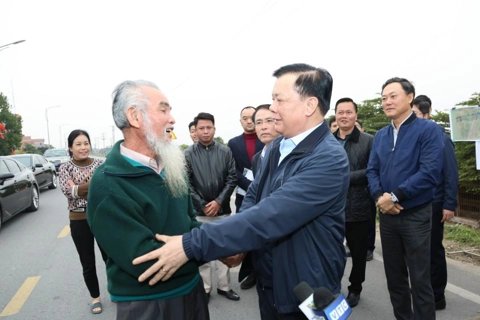
 Hanoi's leaders inspect the site clearance process under the Ring Road No.4 project in Ha Dong District. Photo: The Hanoi Times

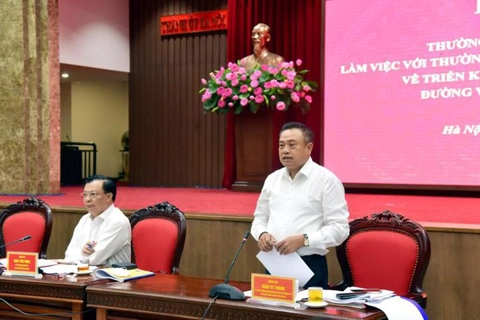
The move was revealed in a decision signed by the Chairman of the Hanoi People’s Committee, Tran Sy Thanh, regarding the compensation, support, and resettlement under the Ring Road No.4 project.


The project involves land requisition, compensation, support, and resettlement in seven districts, namely Ha Dong, Soc Son, Me Linh, Dan Phuong, Hoai Duc, Thanh Oai, and Thuong Tin.


The total land area to be requisitioned for the construction of Ring Road No. 4 is approximately 812.07 ha, and the construction of 13 resettlement areas will need 39.28 ha in five districts of Me Linh, Dan Phuong, Hoai Duc, Thanh Oai, and Thuong Tin.


A key part of the project involves the construction of 13 resettlement areas in five districts of Hanoi, specifically three projects in Van Khe, Dai Thinh, and Chu Phan communes of Me Linh district; two in Duc Thuong and Dong La communes in Hoai Duc district; two in Cu Khe and Tam Hung communes of Thanh Oai district; and four in Khanh Ha, Van Binh, Hong Van, and Van Tao communes of Thuong Tin district.

The investment project for the construction of Ring Road 4 in the Hanoi Capital Region, covering 1,341 hectares and spanning a total length of 112.8 kilometers, will pass through Hanoi (58.2 kilometers), Hung Yen (19.3 kilometers) and Bac Ninh (25.6 kilometers). It will run from the Noi Bai - Lao Cai highway in Soc Son District to the Noi Bai - Ha Long highway in Que Vo District, Bac Ninh.

The project, with a total cost of VND86 trillion (US$3.64 billion), is divided into seven components, including three for compensation and support for households affected by the project, three for building urban roads as part of the Ring Road (financed through public funds), and one for constructing an expressway through a public-private partnership (PPP) mechanism.


Completing Ring Road 4 is expected to improve connectivity between Hanoi and neighboring provinces in the capital area, thereby boosting socio-economic development in the northern region. The capital city serves as the main driving force for growth.

Reactions:
Share:
Trending
Most Viewed
Related news
Hanoi’s mayor urges speedy progress in Ring road No.4 project

Hanoi’s mayor urges speedy progress in Ring road No.4 project

14 Feb, 14:15

Chairman of Hanoi People's Committee Tran Sy Thanh has urged State agencies to leave the festive spirit behind and start working without delay. The leaders of each agency must take responsibility for performing their duties in reaching objectives.

Revised housing roadmap doubles social housing targets for Hanoi

Revised housing roadmap doubles social housing targets for Hanoi

Vietnam’s push to accelerate affordable housing has significantly raised expectations for major cities, with Hanoi now tasked with delivering a far larger volume of social homes as part of the national goal to build more than one million units by 2030.

Social housing supply exceeds targets in 2025 as Vietnam tackles property imbalances

Social housing supply exceeds targets in 2025 as Vietnam tackles property imbalances

Vietnam surpassed its social housing construction target in 2025, marking progress in housing policy, but supply mismatches, high prices and legal bottlenecks continue to weigh on the real estate market.

Online building permits promise faster approvals and transparency in Vietnam

Online building permits promise faster approvals and transparency in Vietnam

Lengthy and complex construction procedures may soon be replaced by faster online approvals as Vietnam rolls out reforms to ease housing pressures and improve transparency in land management.

Hanoi apartment market set for steady growth as suburban supply reshapes demand

Hanoi apartment market set for steady growth as suburban supply reshapes demand

Hanoi’s primary apartment market is entering a more measured expansion phase, driven by growing supply in outlying areas and softer price movements, with infrastructure upgrades and end-user demand expected to anchor the primary apartment market through 2026.

Hanoi plans 39 social housing projects to meet 2030 affordable housing target

Hanoi plans 39 social housing projects to meet 2030 affordable housing target

Hanoi is accelerating its social housing program to expand affordable supply for workers and low- to middle-income residents while managing rising costs and price pressures.

Vietnam real estate market poised for new growth cycle in 2026

Vietnam real estate market poised for new growth cycle in 2026

With more open institutions and stronger trust, real estate will remain a key sector supporting double-digit GDP growth from 2026.

Affordable housing to boost Vietnam’s real estate market

Affordable housing to boost Vietnam’s real estate market

Affordable housing should be viewed as a long-term socioeconomic policy rather than a short-term support measure.

Van Cao – Hoa Lac metro line opens prospects for Hanoi’s urban development

Van Cao – Hoa Lac metro line opens prospects for Hanoi’s urban development

The line is a strategic infrastructure project that plays a key role in shaping urban development and sustainable transport in the new phase.