Japan to further support Vietnam in infrastructure, human resources development: JICA
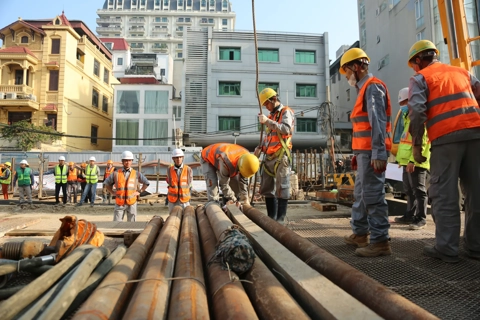
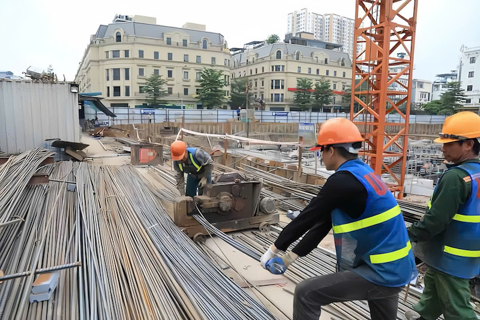
Vietnam is advised to use ODA to develop infrastructure, which is backbone of the economy.
Infrastructure and human resources play essential roles in economic development in Vietnam, said Shimizu Akira, Chief Representative of the Japan International Cooperation Agency (JICA) Vietnam, at a workshop annoucing new plans supporting the Southeast Asian country in the second half of the fiscal year 2022, which runs from October 1 through March 31 of the following year.
According to Akira, Vietnam’s international loans, including JICA ones, fell 16-20% in the past four years, demonstrating the country’s economic growth and rising position in global agendas. But to develop sustainably, a country needs to build infrastructure, and official development assistance (ODA) is a financial source for the basic facilities and systems.
“I believe that Vietnam can fully use ODA loans with long-term repayment up to 30-40 years, with low and fixed interest rates, as a capital mobilization tool for infrastructure development,” Shimizu said at a press conference held last week.
Especially in ODA infrastructure projects, he said Vietnam can take advantage of foreign technology and technology transfer through the participation of Vietnamese companies during the year-long projects.
He noted that it enables Vietnam to join construction or maintenance after the project ends, enhancing the project’s efficiency.
“ODA will continue to be a key component of infrastructure growth, seen as Vietnam’s growth engine, in the coming years. I believe Vietnam will continue to use ODA effectively and see it as a practical tool to raise money and introduce cutting-edge foreign technology into the country,” the Japanese expert stated.
He went on to say that manpower and infrastructure are indispensable for the development of each country.
For that reason, JICA has been cooperating with Vietnam on the issue through technical support and providing loans for the Vietnam Japan University (VJU). The assistance will enable the academy to expand its tertiary education and establish new facilities in Hoa Lac Hi-tech Park in Hanoi from 2023 to make it a public university of 6,000 students.
Cooperation for strengthening manpower development has also been made between JICA and Vietnam – Japan Institute for Human Resources Development (VJCC). The facility was established in 2010, specializing in training high-quality human resources, Japanese language, and cultural exchange.
Regarding the environment for Vietnamese workers under the internship program, JICA intends to use technological cooperation to improve internship placement for technical students. The project is trying to end unlawful job brokerage, which has become an issue of concern in recent years.
Many Vietnamese workers have worked in Japan under the Japan Internship Program for the past years.
"The program provides them with information on how the system works and details about the field they will work in,” Akira told The Hanoi Times. He highlighted the role of guidance and preparations before going to Japan to avoid some possible unexpected problems.
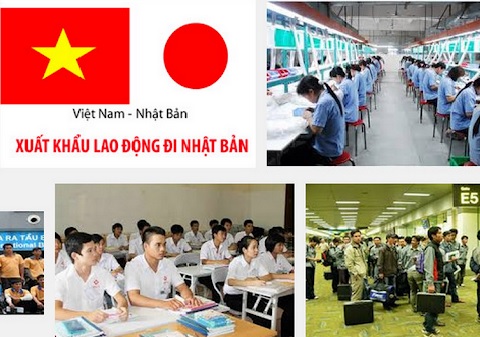
| JICA is working with the Government of Vietnam to provide ODA to 13 vocational training schools. Photo: laodongxuatkhaunhatban.vn |
Akira stressed the importance of manpower in that Vietnam is facing population ageing, which will pose problems for the labor-intensive sectors. Vietnam’s skillful workers remain limited. In addition, workforce productivity in Vietnam is relatively low, equaling 40% of the Philippines and 60% of Thailand.
"JICA is working with the Government of Vietnam to provide ODA to 13 vocational training schools, which at first mark the support by Japanese experts," he said.
In term of healthcare, JICA has continued assisting three hospitals with a long-lasting partnership: Bach Mai Hospital, Hue Central Hospital, and Cho Ray Hospital in Ho Chi Minh City.
Supporting healthcare is part of Japan’s Global Health and Medicine Initiative to increase countries’ resilience against emerging infectious diseases, including Covid-19. Vietnam is one of the exemplary countries in implementing the initiative.
To help Vietnam develop sustainably, JICA also extends assistance in renewable energy, water drainage and treatment, smart city, circular economy, climate adaptation, and agriculture.
In Japan’s fiscal year from April 2021 to March 2022, JICA provided Vietnam with US$75 million worth of ODA, except loans for the private sector, technical support worth $34 million, and grants worth $5 million.