Vietnam's real estate market poised for recovery in 2022
Along with drastic changes in the upcoming Land Law and continued efforts from the Government to push for public investment, there is strong confidence that the real estate market would return to a high expansion rate in 2022.
The strong resilience of Vietnam’s real estate market in 2021 despite the severe Covid-19 impacts has led to optimistic expectations of further recovery next year.
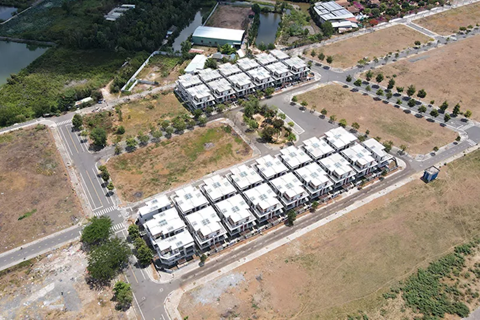
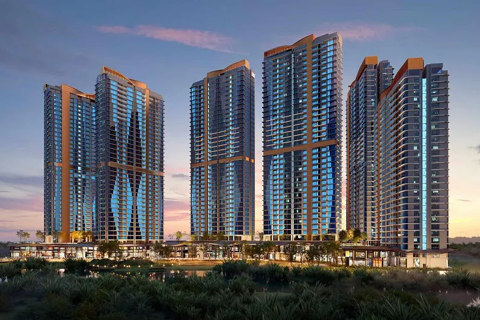
| Gamuda Gardens project. Photo: The Hanoi Times |
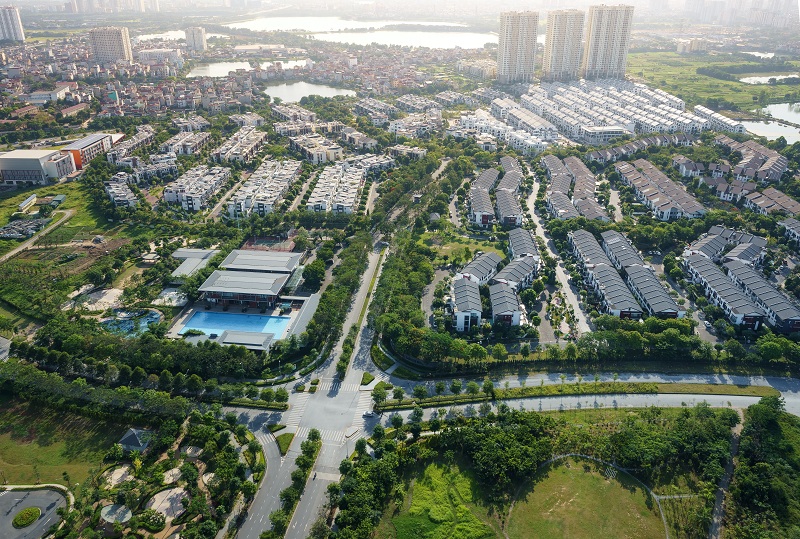
A market report from the real estate website of batdongsan.com.vn revealed property prices continued to rise by 5-10% depending on each locality in 2021 amid several lockdowns and economic disruptions.
In industrial properties, the land rental fees even went up by 15-18% in the Northern provinces of Bac Giang, Hung Yen, Vinh Phuc, or Bac Ninh, the report noted.
According to the report, local authorities in many provinces have approved the construction plan for industrial parks, including supporting infrastructures in the surrounding areas, which are fast becoming attractive destinations for businesses looking for investment.
“A strong push from the Government for public investment is seen as a lifesaver for the economy amid the Covid-19 impacts in the 2020-2021 period. Meanwhile, the flexible management of macro-economic policies and effective control of credit expansion has been supporting the growth of the real estate market in recent years,” Vice General Director of batdongsan.com.vn Nguyen Quoc Anh told The Hanoi Times.
This, however, does not hide the current challenges of the property market, especially those posed by the pandemic, complicated regulation, and shortage of supplies.
“The scarce supply of new property projects has created opportunities for brokers to manipulate the market or hoarding products to keep prices soaring,” Nguyen Quoc Hiep, chairman of Vietnam Contractors Association, told The Hanoi Times.
Hiep also pointed out the fact that the real estate sector is governed by 12 different regulations, which are causing unnecessary delays in the progress of projects and delivery schedules.
“One of the biggest obstacles in terms of regulation in 2021 continues to be the selection process of project investors or procedures to change land use purpose in urban areas,” Hiep said, adding this has caused delays on nearly 400 housing projects in both Hanoi and Ho Chi Minh City.
“Many land plots are still pending such a process, for which the Ministry of Construction should revise technical specification in terms of procurement and investment in real estate market,” he continued.
On September 23, 100% of deputies of the Hanoi People's Council agreed on a resolution to renovate and repair old apartments in Hanoi with an estimated budget of VND500 billion ($22 million) for the 2021-2025 period. In the first step of the plan, the city's authorities would review the current conditions of old and dangerous apartments that are at high risk of collapsing, and the process is set to be completed before the second quarter of 2023. Around 10 old apartment buildings would be selected for reparation during the 2021-2025 period, including those in Kim Lien, Trung Tu, Nghia Tan, Thanh Xuan Bac, or Thanh Xuan Trung wards. |
Potential investment channel
Vice Director of the Central Institute for Economic Management (CIEM) Tran Kim Chung said in 2021, many laws, including the Investment Law, Law on Construction, and Law on Real Estate Trading have been revised to address current issues in the property market.
“A comprehensive change in real estate regulations could have major impacts on the economy overall, and the real estate sector in particular,” Chung said, adding he expects clearer results in 2022 and subsequent years as new changes in these laws start taking effect.
Meanwhile, Vice Director of IP Land Tran Quoc Viet said the real estate market is in a cycle of development and all the signs are showing a booming period ahead.
Viet referred to the recent peaks of the market in 2001-2008 after the financial crisis in 1997, or in 2014-2017 with a strong rise of condotel in the aftermath of the 2011 oil price shock.
According to Viet, in 2021, foreign direct investment (FDI) to Vietnam continues to grow despite all difficulties, or the Ministry of Construction has proposed a credit package of VND65 trillion ($2.84 billion) for social housing projects are expected to be the main drivers of the real estate market.
“Along with drastic changes in the upcoming Land Law and continued efforts from the Government to push for public investment, there is a strong confidence that the real estate market would return to high expansion rate in 2022,” Viet told The Hanoi Times.
Viet, however, expressed concern over the lack of new products, especially in the market segment for budget commercial and social houses.
With an expectation for rising housing prices next year, Viet said industrial properties could become the highlight of the market, driven by the growing FDI.
General Secretary of the Vietnam Association of Realtors (VARS) Nguyen Van Dinh shared the view that the lack of supply could continue to ensure prices’ upward trend, especially in Hanoi and Ho Chi Minh City.
Nevertheless, Dinh warned potential investors to be cautious before investing in property projects in terms of legal status and profitability, avoiding putting “all eggs into one basket”.