Affordable housing to boost Vietnam’s real estate market
Affordable housing should be viewed as a long-term socioeconomic policy rather than a short-term support measure.
THE HANOI TIMES — Affordable commercial housing is expected to play a key role in restoring balance to Vietnam’s real estate market, as the government intensifies efforts to address persistent bottlenecks in the property sector.
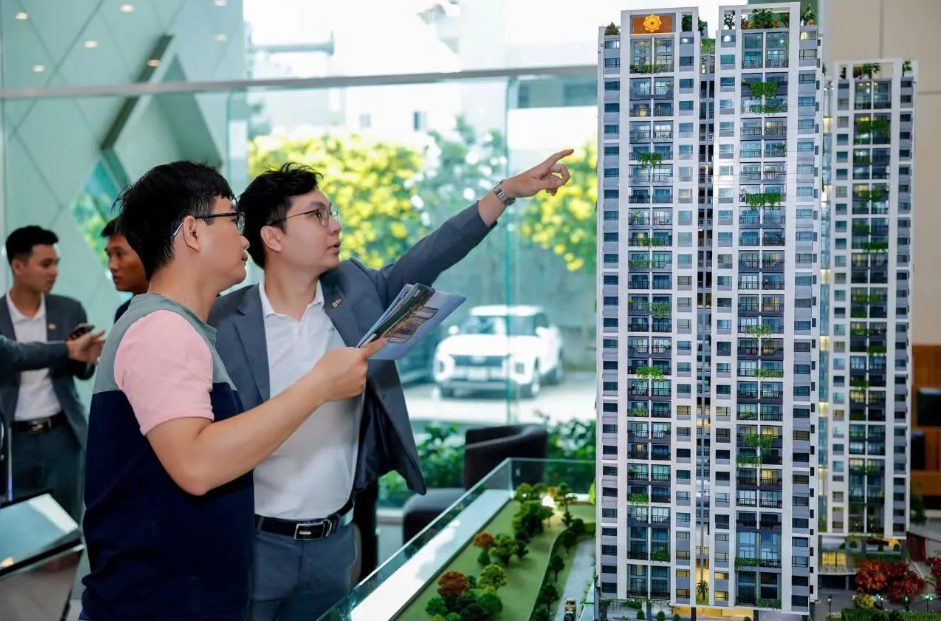
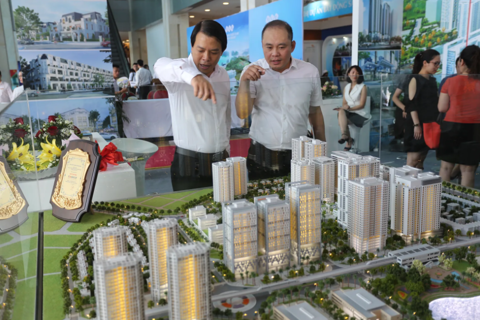
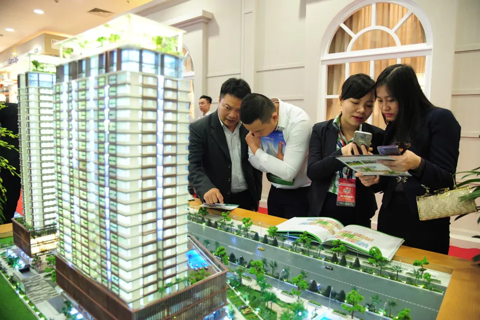
Customers seek information about a real estate project. Photo: Tieu Thuy/The Hanoi Times
Rapid urbanization continues to push housing demand in major cities, especially Hanoi and Ho Chi Minh City. However, affordable commercial housing has become a major bottleneck in Vietnam’s real estate market.
Despite being the segment with the highest real demand, supply remains scarce while prices are far beyond the reach of most urban residents.
Market studies show that about 70% of housing demand in major cities comes from middle-income and lower-middle-income households, who can afford homes priced at VND25-VND35 million per square meter (US$1,000-$1,400). In reality, this segment has almost disappeared from the market in recent years.
In Hanoi, newly launched commercial housing projects are largely in the mid to high-end segment, with prices commonly ranging from VND45-70 million per square meter (US$1,800-2,800) or higher in central areas.
Projects priced for middle-income buyers are rare and are mostly located far from the city center, with incomplete infrastructure.
In Ho Chi Minh City, from 2021 to 2024, there were almost no affordable commercial housing projects. Even Class C units priced below VND50 million per square meter (US$2,000) accounted for only 15%-18% of new supply, while high-end housing made up as much as 70%.
According to the Vietnam Association of Real Estate Brokers, in the first nine months of 2025, total nationwide new housing supply exceeded 100,000 units.
Only about 6% were classified as affordable housing, mostly social housing, while 94% fell into the mid to high-end segment.
This supply-demand imbalance has pushed the dream of homeownership further out of reach for millions of urban workers and added pressure on social welfare and sustainable urban development.
In Hanoi alone, from 2021 to 2025, around 151,000 new households were formed each year, while only about 102,000 apartments and low-rise homes were supplied, leaving an annual shortfall of roughly 49,000 units for affordable housing demand.
These figures highlight persistently strong real demand, especially from middle-income earners, as well as migrant workers and young people, driving a serious mismatch that fuels price increases and reduces access to housing.
Nguyen The Diep, Vice Chairman of the Hanoi Real Estate Club, said the main constraints holding back affordable commercial housing include rising land costs in major cities and shortcomings in land use fee calculation mechanisms, which push up developers’ input costs.
“Lengthy legal procedures also add to financial burdens during project delays, forcing higher selling prices. The lack of meaningful incentives for this segment remains another key obstacle,” Diep said.
Refining legal framework as priority
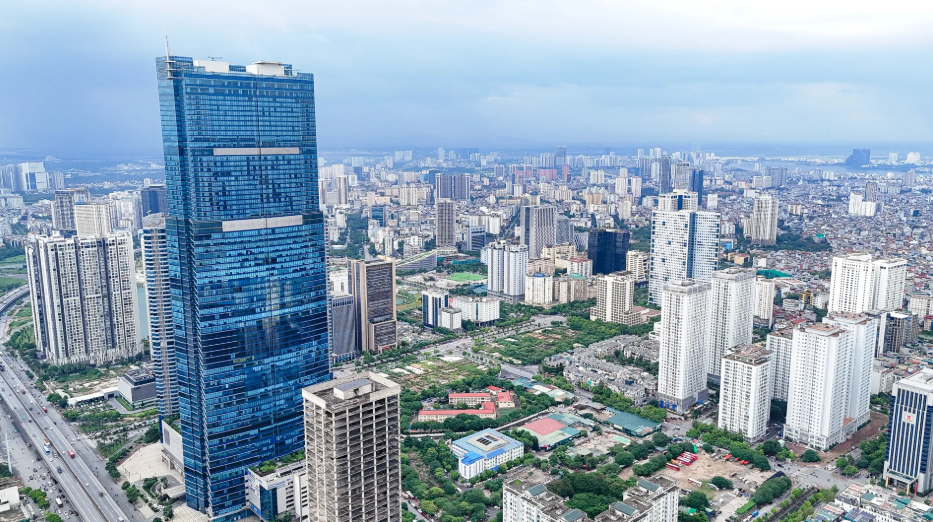
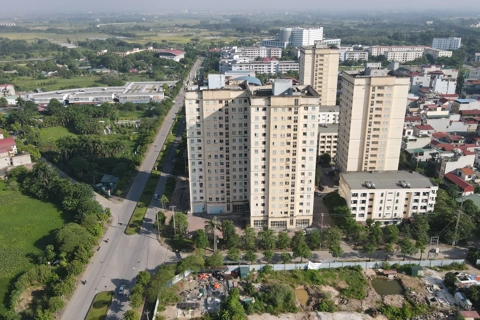
Hanoi from above. Photo: Thanh Hai/The Hanoi Times
Experts agree that developing affordable commercial housing requires stronger and more predictable institutions and policies.
Land use fee determination should be more reasonable and closer to market levels, while still aligned with social welfare goals. Simplifying and shortening administrative procedures is seen as critical, allowing developers room to lower prices and buyers to benefit directly.
Dang Hung Vo, former Deputy Minister of Natural Resources and Environment, said Vietnam lacks a dedicated legal framework for affordable commercial housing.
He called for the concept to be formally included in laws on land and housing, as well as guiding decrees, to support targeted incentive policies and avoid arbitrary approvals.
Strategic solutions also include proactively planning and allocating land for affordable housing in urban master plans and zoning plans.
“Rather than leaving development to market forces, authorities should clearly define land ratios for social housing and affordable commercial housing in new urban areas and concentrated housing zones, to balance product structures and limit spatial segregation,” Vo added.
Linking affordable housing development with public transport infrastructure, such as urban rail, ring roads and radial corridors, would encourage buyers to live farther from city centers, easing land and housing price pressure in core areas, he added.
Credit is viewed as a key lever to stimulate both supply and demand. Experts call for medium and long-term preferential credit packages dedicated to affordable housing developers, with interest rates below market levels and clear, transparent access conditions.
Middle-income homebuyers should also receive support through stable long-term loans, aligned with repayment capacity.
Financing and banking expert Can Van Luc said affordable housing should be treated as a long-term socio-economic policy rather than short-term support measures.
According to Luc, buyers in this segment are mainly young people and workers with stable but modest incomes, who need long-term loans of 20 to 30 years at stable interest rates.
“Well-designed financial tools could turn affordable commercial housing into a pillar of sustainable real estate market growth,” he noted.
Nguyen Van Dinh, Vice Chairman of the Vietnam Real Estate Association, said attracting developers to this segment requires fair benefit sharing among the State, businesses and residents.
Beyond land and credit incentives, authorities could consider higher construction density or floor area ratios for affordable housing projects, while ensuring adequate infrastructure, helping developers offset costs and maintain investment efficiency.
Public-private partnership models are also seen as a promising approach to mobilize social resources.
As the government moves decisively to address difficulties in the real estate market, accelerating the development of affordable commercial housing is expected to provide a major boost and help restructure the market toward more balanced, healthy and sustainable growth.
“This is not only an immediate need but also a long-term strategic task shaping Vietnam’s economic development and urban landscape in the decades ahead,” Dinh asserted.