14TH NATIONAL CONGRESS OF THE COMMUNIST PARTY OF VIETNAM
Log in
Property

Hanoi plans major incentives to expand social housing supply by 2030

The draft regulation may pull down construction costs for social housing developers, dragging the prices down to meet demand from low-income earners.

THE HANOI TIMES — A draft resolution on social housing development in Hanoi may cover up to 50% of the technical infrastructure construction costs for investors and contractors when doing standalone social housing projects.
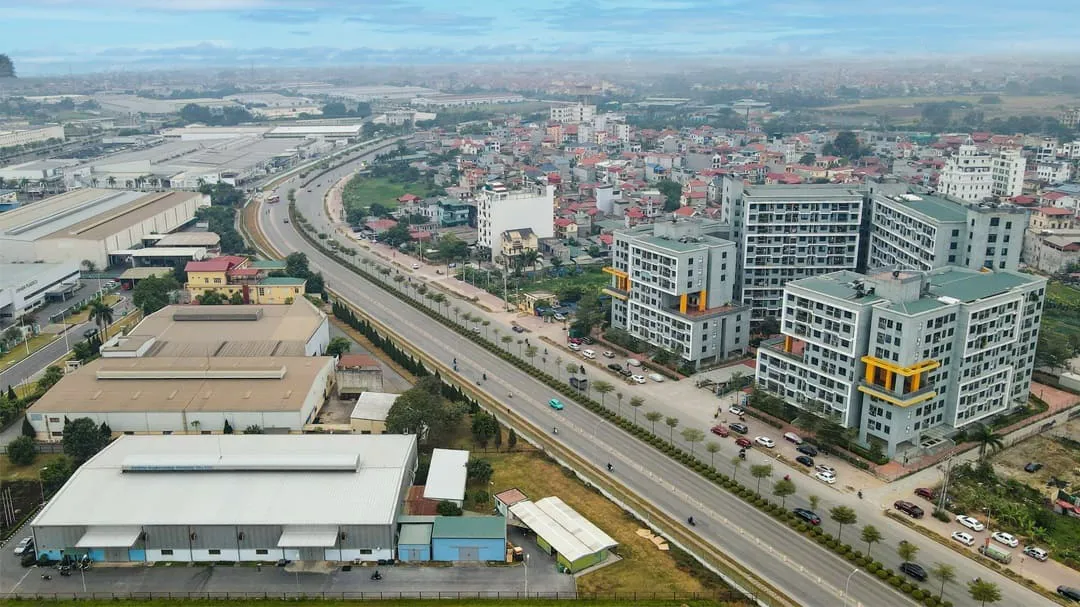
A social apartment complex built in Dong Anh Commune, Hanoi. Photo: hanoi.gov.vn

The proposal applies to infrastructure costs outside the buildings, excluding internal areas, commercial spaces and parts handed over to the State.

Infrastructure costs will be determined based on investment norms announced by the Ministry of Construction at the time of project approval.

The exact support level will be specified by the city in investment approval documents or investor selection decisions.

For rental-only social housing projects, developers will be fully supported with 100% of external infrastructure costs.

The city will also cover these costs for social infrastructure projects with investment approval.

Developers are not allowed to include these expenses in selling prices, rent-to-own schemes, or rental rates.

In addition, businesses will be fully exempted from all administrative fees and charges during the pre-investment phase until they are eligible to begin construction.

In terms of credit incentives, they will be able to borrow up to 80% of the total project investment through city budget funds entrusted to the Hanoi Development Investment Fund.

The loan term is 25 years, with interest rates 2%–5% lower per year than those of the Vietnam Bank for Social Policies.

The draft resolution is expected to be considered at the year-end session of the Hanoi People’s Council, scheduled for September 23.

Earlier, Hanoi also proposed lowering the interest rate for buyers and renters of social housing to 4.8% per year, instead of the current 6.6%.

The same rate would apply to low-income households, near-poor families, loans for home repairs and construction, students borrowing for education, and workers seeking overseas employment.

These proposals show the city’s efforts to ease difficulties for both developers and buyers, thereby boosting the supply of social housing.

Under the national plan to build at least one million social housing units, Hanoi is tasked with 56,200 units by 2030 – among the highest nationwide.

This year, the city expects to complete six projects with more than 4,700 units, surpassing the annual target of some 4,600 units.

Since late last year, a series of social housing projects have been launched in Hanoi, but prices have continued to rise.

Three years ago, social housing units were sold for less than VND20 million (US$758) per square meter. Today, prices often reach VND25 million – VND27 million ($947 - $1,020).

The highest rate is seen at the Rice City Long Chau project in the former Long Bien District, with tentative prices of some VND27 million ($1,020) per square meter.

Reactions:
Share:
Trending
Most Viewed
Related news
Prime Minister urges measures to boost supplies and control house prices

Prime Minister urges measures to boost supplies and control house prices

Vietnam’s government is stepping up efforts to rebalance the real estate market as Prime Minister Pham Minh Chinh urges faster policy action to expand housing supply, address affordability pressures and ensure the sector supports both economic stability and social welfare.

Ho Chi Minh City forms first professional association for apartment management

Ho Chi Minh City forms first professional association for apartment management

Amid rapid urban growth, Ho Chi Minh City has established a professional body for apartment management, becoming the first locality in Vietnam to do so.

Real estate credit surge prompts tighter oversight to safeguard Vietnam’s financial stability

Real estate credit surge prompts tighter oversight to safeguard Vietnam’s financial stability

Vietnam’s real estate sector has absorbed a sharp rise in credit, supporting market recovery while raising concerns over capital concentration, speculative risks and the need for tighter policy coordination.

Revised housing roadmap doubles social housing targets for Hanoi

Revised housing roadmap doubles social housing targets for Hanoi

Vietnam’s push to accelerate affordable housing has significantly raised expectations for major cities, with Hanoi now tasked with delivering a far larger volume of social homes as part of the national goal to build more than one million units by 2030.

Social housing supply exceeds targets in 2025 as Vietnam tackles property imbalances

Social housing supply exceeds targets in 2025 as Vietnam tackles property imbalances

Vietnam surpassed its social housing construction target in 2025, marking progress in housing policy, but supply mismatches, high prices and legal bottlenecks continue to weigh on the real estate market.

Online building permits promise faster approvals and transparency in Vietnam

Online building permits promise faster approvals and transparency in Vietnam

Lengthy and complex construction procedures may soon be replaced by faster online approvals as Vietnam rolls out reforms to ease housing pressures and improve transparency in land management.

Hanoi apartment market set for steady growth as suburban supply reshapes demand

Hanoi apartment market set for steady growth as suburban supply reshapes demand

Hanoi’s primary apartment market is entering a more measured expansion phase, driven by growing supply in outlying areas and softer price movements, with infrastructure upgrades and end-user demand expected to anchor the primary apartment market through 2026.

Hanoi plans 39 social housing projects to meet 2030 affordable housing target

Hanoi plans 39 social housing projects to meet 2030 affordable housing target

Hanoi is accelerating its social housing program to expand affordable supply for workers and low- to middle-income residents while managing rising costs and price pressures.