Hanoi urged to remove bottlenecks for private investors in park building
In 2021-2025, Hanoi's authorities will upgrade 45 existing parks and public gardens and build six new ones.
The authorities of Hanoi may find it hard to complete under-construction park projects on schedule as regulatory issues have blocked investors from performing their jobs.
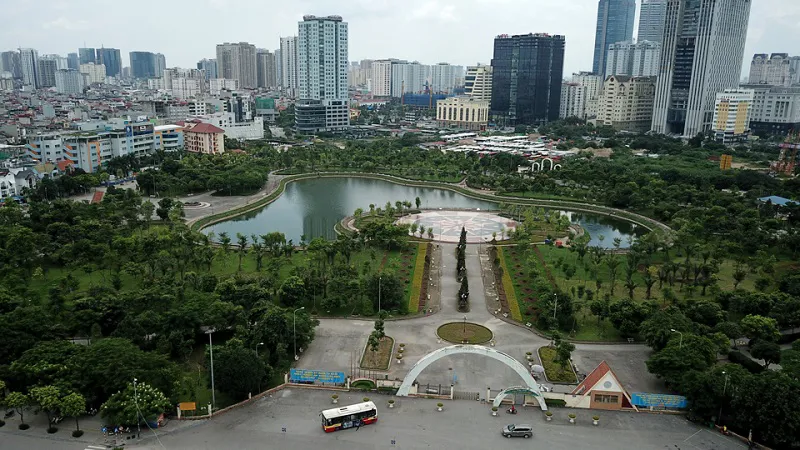
| The view of Cau Giay Park in Hanoi. Photo: Pham Hung/The Hanoi Times |
Experts have said that most public space development projects depend on the Government’s allocation of its public investment fund. In a world of uncertainties, such dependence is the main reason for the delay of public space projects.
Under a plan released in 2014, Hanoi will have spent VND270 trillion (US$11.5 billion) planting 13,500 hectares of trees to make the city green by 2050.
By 2030, the city expects to have financed VND51 trillion (US$2.17 billion) for public space development projects. The figure comprises more than VND23 trillion (US$979.5 million) worth of State funding and more than VND27 trillion (US$1.15 billion) worth of private investment.
In 2021-2025, Hanoi authorities will upgrade 45 existing parks and public gardens, build six new ones, and hasten the development of construction plans for several other parks.
The Hanoi Department of Construction said that all six new park projects are now behind schedule due to several difficulties, most of which involve in the selection of the investor and land clearance.
The development of green spaces is a critical issue for the capital city as every Hanoian now has a green space of only 5m2, said Dao Ngoc Nghiem, Vice Chairman of the Vietnam Urban Development and Planning Association.
"The figure is lower than the city’s expectation of 12-15m2 and lower than residents of other localities," he said.
On July 17, 2023, the Hanoi People’s Council issued Resolution 16/2013/NQ-HDND encouraging private investors to join local public investment projects and enjoy incentives in the land lease, fees, and charges, but “the city needs more effective regulations and solutions,” Nghiem said.
Dong Phuoc An, director of the management unit for the construction of public and industrial facilities in Hanoi, said that the construction of public spaces, including parks, depends largely on the public investment budget.
He proposed that the municipal authorities consider dividing its current State budget into one specific project at a time if the provision of the medium-term budget for the 2021-2025 period is not allocated yet.
Raising private investment
According to the Vice General Secretary of the Vietnam Urban Planning and Development Association (VUPDA), Truong Van Quang, raising private investment in public space development is a good way to develop parks.
“But the policy must assure the area of lakes and trees in the park as planned and guarantee the investors receive their full benefits and rights,” he said.
“The city should also balance the interest of relevant parties and at the same time, improve the quality of management to avoid wrongdoings,” Quang added.
That could bring the investor some instant benefits but impose a strongly negative impact on the local community and make the city suffer unsustainable development, he warned.
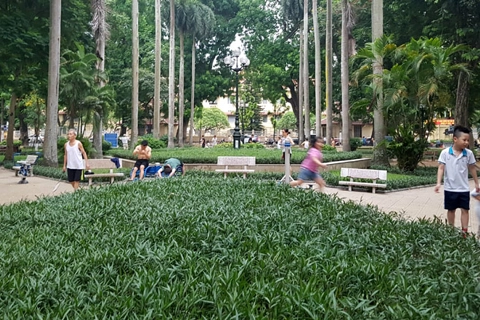
| People enjoy entertainment activities at Thong Nhat Park in Hanoi. Photo: Pham Hung/The Hanoi Times |
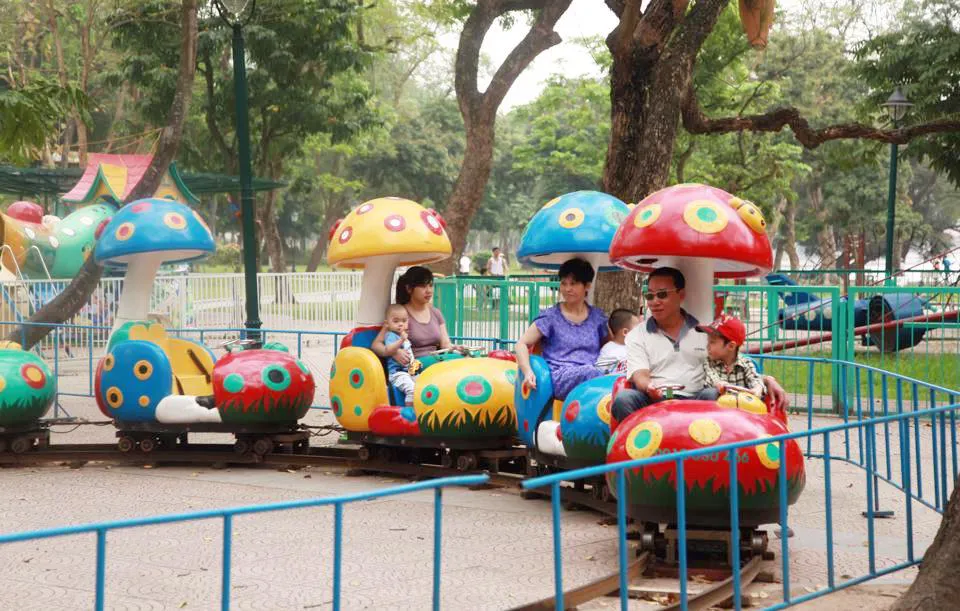
Architect La Thi Kim Ngan, former Director of Hanoi Construction Planning Institute, stressed that enterprises and their capital are key to developing parks as the work cannot only depend on the State budget.
She said the city authorities need beneficial policies for the enterprises to encourage them to join the projects.
“Hanoi used to successfully ask enterprises to provide financial assistance to the solicitation of river banks and planting of urban trees. Therefore, the city needs a framework that mobilizes the maximum effort of all communities in park planning,” Ngan said.
Regulatory difficulties have tackled park projects from a proper operation, Tran Duc Hoat, Secretary of the Party Committee cum Chairman of the People’s Council of Nam Tu Liem District, addressed.
"What matters most to investors is the maximum gross building density of public and theme parks, which is set at 5% and 25%, respectively," he said.
The Government leases the land to the designated investor, and the investor will make profits from its activities on the land. In return, the investor has to build the park and hand it over to the local government.
“We need to resolve regulatory issues regarding the benefits investors may receive. If the issues remain unsettled, it will take a long time to complete park projects.”
Vice Chairman of the Vietnam Urban Development and Planning Association Dao Ngoc Nghiem said that the involvement of enterprises and individuals to manage, preserve and develop parks, public gardens, and urban trees in Hanoi is inevitable.
"The investors building parks should be able to do business in the underground spaces, sell tickets to their entertainment activities, and administer advertising boards around the park," he said.