Online building permits promise faster approvals and transparency in Vietnam
Lengthy and complex construction procedures may soon be replaced by faster online approvals as Vietnam rolls out reforms to ease housing pressures and improve transparency in land management.
THE HANOI TIMES — The revised Construction Law of 2025 will ease planning bottlenecks by digitizing data and moving building permit issuance fully online to better management and facilitate residents in housing issues.
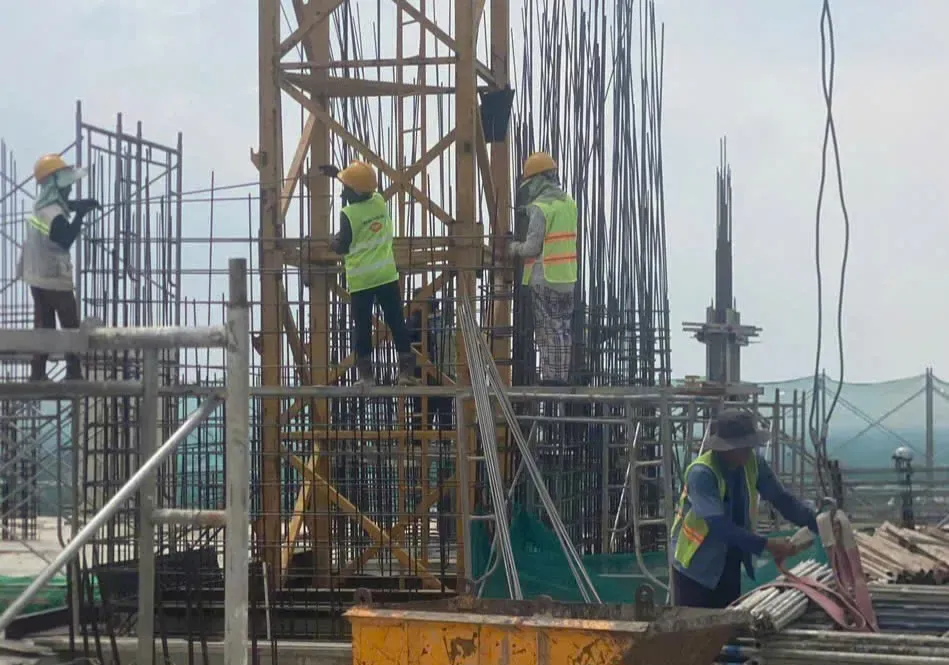
A construction site in Hanoi. Photos: Kinh te & Do thi Newspaper
The reform carries particular significance as many households in newly merged areas remain stalled by complex and overlapping construction procedures.
Passed by the National Assembly in early December 2025 and to come into effect on July 1, the law will simplify procedures by shifting to end-to-end online processing and shortening permit timelines to 7-10 days, compared with 15 to 30 days as being regulated.
Minister of Construction Tran Hong Minh said the new framework follows a “one project, one procedure” principle, covering the entire process from preparation to groundbreaking. The change will cut compliance time and costs by at least 30% for residents and businesses, while shifting greater responsibility to design consultants to ensure structural safety instead of relying solely on state pre-approval.
Many residents have welcomed the reform but urged authorities to issue practical guiding decrees quickly to resolve problems that have persisted for years.
Nguyen Van Hung, a Hanoi resident, said he feels encouraged yet uneasy as his severely deteriorated house cannot be rebuilt due to permit requirements under urban regulations.
He called on the government to promptly issue guiding decrees and connect national land and population databases so authorities can grant permits on time and avoid indefinite delays or forced unlicensed construction.
Le Thi Tham, a resident of Tam Long Ward in Ho Chi Minh City, supports the fully online permitting model and the principle of “no contact, no paperwork”, which she said would reduce repeated travel and curb misconduct.
However, she noted ongoing difficulties in newly urbanized areas where construction remains frozen due to the lack of detailed planning, despite urgent housing needs.
She urged the government and the Ministry of Construction to introduce fast-track guidance and special mechanisms for urbanizing zones, while publishing standard designs and planning maps on digital platforms so residents can understand what they can build and where.
Such measures would help households whose legal documents remain incomplete due to historical factors, she said.
In practice, the Hanoi Public Administration Service Center began accepting all construction-related administrative applications online, including full-process online submissions, in early June 2025.
According to Hoang Hien Hanh, Deputy Director of Branch No. 1 of the center, staff verify and cross-check applications within ten minutes before forwarding them to local economic, infrastructure and urban management units.
Authorities then notify applicants the same day whether their dossiers meet requirements.
From an economic perspective, economist Dinh The Hien described the minimum 30% reduction in compliance time and costs as a major milestone. At a time when the economy faces capital constraints, cutting permit timelines to seven to ten days serves as a strategic lever that unlocks large volumes of idle capital tied up in projects awaiting approval.
With the “no contact, no paperwork” approach, the reform directly targets the long-standing “ask–give” mechanism that has burdened residents and businesses, Hien added.
Guidance needed without delay
Economist Hien stressed that to ensure these reforms produce real results rather than remain policy statements, the government must urgently issue guiding decrees and avoid delaying implementation until July 2026, when the law takes full effect.
Continued delays would leave areas transitioning from rural to urban status stuck in stagnation, waste land resources and slow local urbanization, he warned.

An official in Lang Ward, Hanoi guides a local resident how to get online building permit.
Real estate expert Tran Khanh Quang shared this view, saying online permitting would clarify the traditionally complex relationship between residents and public authorities.
The new approach would eliminate unofficial costs and create a fairer environment for accessing public services, he said.
“We need simple, clear guidance so even residents in remote areas can complete procedures through integrated land and population data systems,” Quang said.
“Only when implementation runs quickly and smoothly, in line with the National Assembly’s intent, will housing bottlenecks ease and support growth in building materials and local labor markets.”
Meanwhile, lawyer Truong Ngoc Lieu of the Hanoi Bar Association described full-process online permitting as a breakthrough that strengthens protection of citizens’ legitimate rights. The system offers strong transparency and traceability, allowing residents to track application progress and receive timely feedback, thereby preventing delays and harassment.
Lieu also urged the government to issue detailed guidance immediately, with a focus on integrating national land and population databases.
“This integration holds the key to resolving urgent problems for many households in newly urbanized wards that still lack land-use right certificates,” he said.
Without clear guidance on alternative data sources or transitional steps, residents in these areas will continue to face major obstacles when seeking legal construction permits, he added.
According to architect Dao Ngoc Nghiem, former Director of the Hanoi Department of Planning and Architecture, effective online permitting requires detailed planning and clear urban design at the local level. To shorten approval times, authorities must publish planning schemes, including technical infrastructure plans, especially power supply.
“Urban architectural management rules need greater specificity and permit reviews must move faster and apply consistently, with a focus on completing work rather than waiting for office hours to end,” Nghiem said.
He added that authorities should apply technology more effectively in permit processing and notify residents and businesses immediately once permits are issued.
To support this shift, local governments need to strengthen construction management staff at provincial and ward levels, according to the experienced architect.
Where ward-level capacity remains limited, authorities should reinforce technical teams at the grassroots level and introduce policies to attract qualified construction management professionals into the public sector.
Expanding digital tools that connect residents and businesses with permitting authorities will further simplify online procedures and help the revised law deliver its intended impact.