Prime Minister agrees to raise income thresholds for housing
The prime minister urged provinces and cities to increase supply, replicate effective models, and ease financing conditions for developers and homebuyers to reach the target of 100,000 units in 2025.
THE HANOI TIMES — Prime Minister Pham Minh Chinh has agreed to raise income thresholds for purchasing social housing, following a proposal from the Ministry of Construction.
At the national conference on social housing development on August 16, the ministry suggested lifting the limits to VND20 million (US$762) per month for single buyers and VND40 million ($1,524) for households.
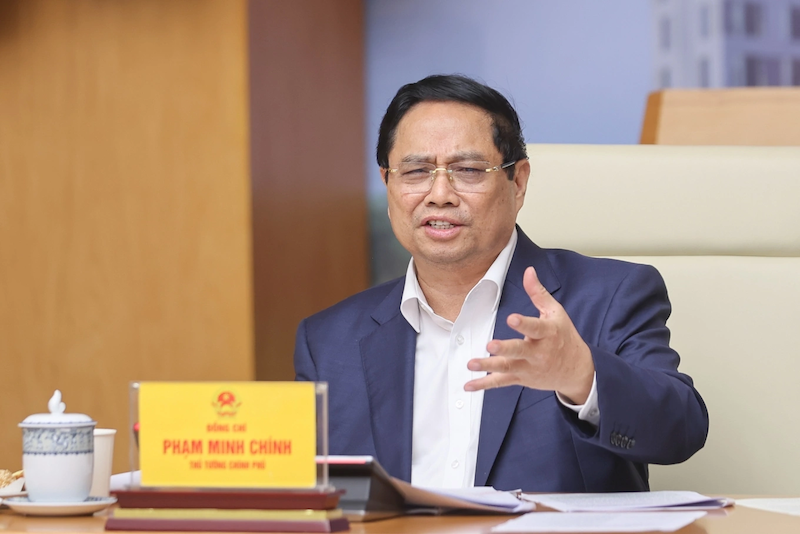
Prime Minister Pham Minh Chinh speaks at the national conference on social housing development on August 16. Photo: VGP
The ceiling is VND15 million ($571) for single buyers and VND30 million ($1,143) for households as regulated in the government's Decree No. 100/2024 on social housing development.
The prime minister directed the ministry to fast-track amendments to the decree and reflect the changes.
According to local leaders, many workers and specialists are ineligible from buying social houses as their earnings exceed the limit. But their incomes are not enough to buy commercial homes.
Haiphong officials proposed that the government further raise the threshold or allow local authorities to set their own limits, citing differences in living costs.
Vu Van Dien, Vice Chairman of the Quang Ninh Provincial People’s Committee, echoed this view, calling local flexibility vital to address real conditions.
Deputy Governor of the State Bank of Vietnam Pham Quoc Dung said that nationwide uniform rules are “too strict” and fail to reflect regional disparities.
On financing, Vuong Van Minh, Deputy General Director of the Vietnam Bank for Social Policies, noted challenges in reaching low-income residents in urban areas.
The operation of the two-tier local government model has turned some cities into communes, low-income residents in those areas are now subject to the social housing regulations, he said.
There should be amendments to the rules to benefit those individuals, Minh added.
Verifying incomes of informal workers without contracts is another bottleneck, said Pham Van Thinh, Vice Chairman of the Bac Ninh Provincial People’s Committee.
He suggested assigning this task to the police, who already manage relevant databases, with a seven-day processing timeframe.
Beyond income criteria, the prime minister urged localities to expand supply, replicate effective models, and provide practical guidance for developers and buyers.
He recommended that each province and city must establish a steering committee for social housing development, chaired by the Secretary of the provincial Party Committee or Chairman of the provincial People’s Committee.
The prime minister stressed immediate enforcement of Resolution No. 201, which pilots special mechanisms to speed up social housing, while cutting unnecessary administrative hurdles.
“Procedures must be processed under a 'priority green channel', covering investor selection, bidding, permits, and price approvals,” said Chinh.
The prime minister also tasked local governments with reviewing urban plans, allocating well-located land, and ensuring essential infrastructure, from transport to education and healthcare, to create livable communities and support economic growth.
Social housing targets remain firmly unchanged
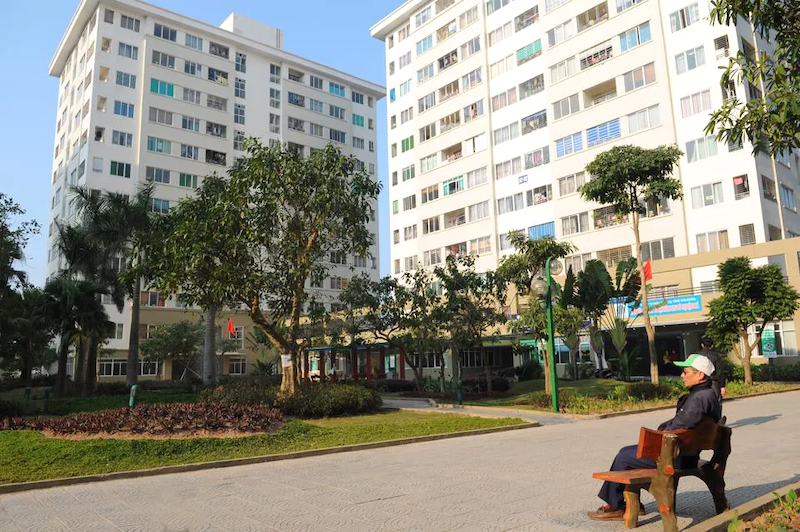
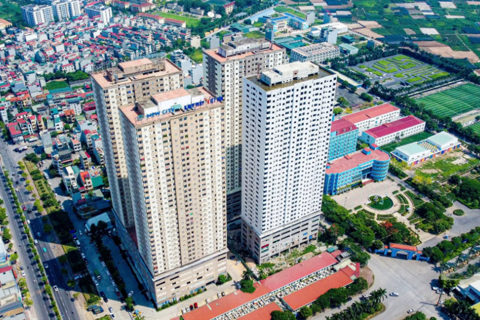
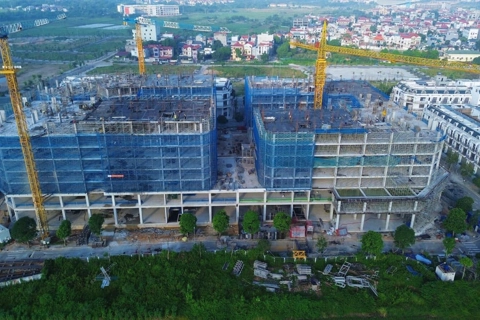
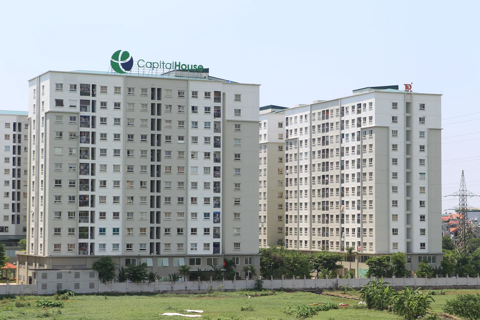
A social housing project in Hanoi. Photo: Mai Van/The Hanoi Times
Vietnam plans to build at least one million social housing units for low-income earners and industrial park workers during 2021-2030.
Eligibility has recently been expanded to include civil servants and public employees with housing difficulties, according to the Ministry of Construction.
A total of 692 projects are under development nationwide, supplying more than 633,000 units.
Of these, 146 projects have been completed with nearly 104,000 units; 144 projects are underway with almost 130,000 units; and 402 projects, totaling over 400,000 units, have been approved for investment.
The numbers represent 60% of the national target.
In January-July of 2025, nearly 37,000 units, 37% of the annual plan, were completed. By year-end, another 36,700 units are expected, bringing the total to almost 74,000, or 73% of the yearly plan, exceeding the minimum target of 63,000 units.
Chinh praised the efforts of ministries and localities but stressed that demand remains very high, particularly in Hanoi, Ho Chi Minh City, Haiphong, Bac Ninh, Dong Nai, and Lam Dong.
He reaffirmed that the target of 100,000 units in 2025 remains unchanged, with provincial targets already assigned.
To achieve these goals, he urged provinces and cities to increase supply, replicate effective models, and provide flexible support for developers and homebuyers.
Completed projects must finalize procedures and announce availability through mass media.
For nearly completed projects, investors should mobilize resources to ensure handover within 2025. For projects under construction or newly launched, administrative obstacles must be swiftly resolved to accelerate implementation.
The Government expects 37,000 units to be delivered this year, creating a foundation for meeting annual targets in the coming years..