Vietnam real estate market poised for new growth cycle in 2026
With more open institutions and stronger trust, real estate will remain a key sector supporting double-digit GDP growth from 2026.
THE HANOI TIMES — Vietnam’s real estate market is expected to enter a new growth cycle in 2026, supported by improving macroeconomic conditions, stronger policy clarity and rising investor confidence across key segments.
Former Chairman of the Vietnam Real Estate Association and former Vice Chairman of the Hanoi People’s Committee Nguyen Van Khoi shared with The Hanoi Times his views on market conditions, challenges and policy solutions to promote stable and healthy real estate development and support economic growth.

Vietnam Real Estate Association Chairman and former Vice Chairman of the Hanoi People’s Committee Nguyen Van Khoi.
How do you assess developments in the real estate market over the past year?
In my view, the past year was extremely challenging but also particularly significant for the real estate market. Amid global economic volatility and high capital costs, the domestic market faced clear pressures on liquidity and sentiment.
However, Vietnam has maintained macroeconomic stability and has gradually removed major bottlenecks in the market. Politburo Resolutions No. 57, 59, 66 and 68, together with National Assembly resolutions and the legal framework issued in 2023-2024, clearly reflect renewed thinking and strong determination to unlock productive forces and mobilize social resources.
The Government and the prime minister have proactively directed many solutions to promote social housing to ensure social security while restructuring supply and demand and stabilizing the real estate market.
At the same time, the Ministry of Construction has stepped up guidance, inspections and coordination with ministries and localities to resolve difficulties in project implementation. As a result, business and investor confidence is gradually recovering and the real estate market is showing more positive signs of recovery and development.
Meanwhile, industrial and logistics real estate continues to grow well, with industrial park occupancy rates of about 83%-85% in the North and 90%-92% in the South.
Tourism and resort real estate recorded around 218 projects with about 10,800 units. There are 2,385 commercial housing and urban area projects with a total scale of about 5.2 million units.
Annual real estate transactions average around 600,000. Notably, 658 social housing projects with about 657,000 units are being implemented. However, social housing and mid-priced housing for real demand remain in short supply.
Do provincial mergers, the two-tier local government model and expanded infrastructure spending form a foundation for a new growth cycle in 2026?
I believe these are indeed very important turning-point factors. Provincial mergers linked to the two-tier local government model at the provincial and commune levels are not only aimed at streamlining the administrative apparatus but also at opening up new space for planning, investment and market organization.
With fewer intermediate layers and stronger accountability at the grassroots level, the investment environment will become more transparent and efficient.
In addition, large budget resources allocated to infrastructure will create strong spillover effects, driving urban development, industrial parks, logistics and housing and laying the foundation for the real estate market to enter a more stable cycle from 2026.
However, there is an urgent need to adjust provincial-level master plans with a long-term vision looking 50 years ahead and toward 2125 as a framework to guide development in 10-year and 20-year phases.
Development should follow transit-oriented development models and multi-polar and multi-center structures. Investment models such as PPP, BT and FDI, together with other social capital sources for intra-regional and inter-regional transport infrastructure, including urban railways, expressways and airports, will be the backbone for strong growth.
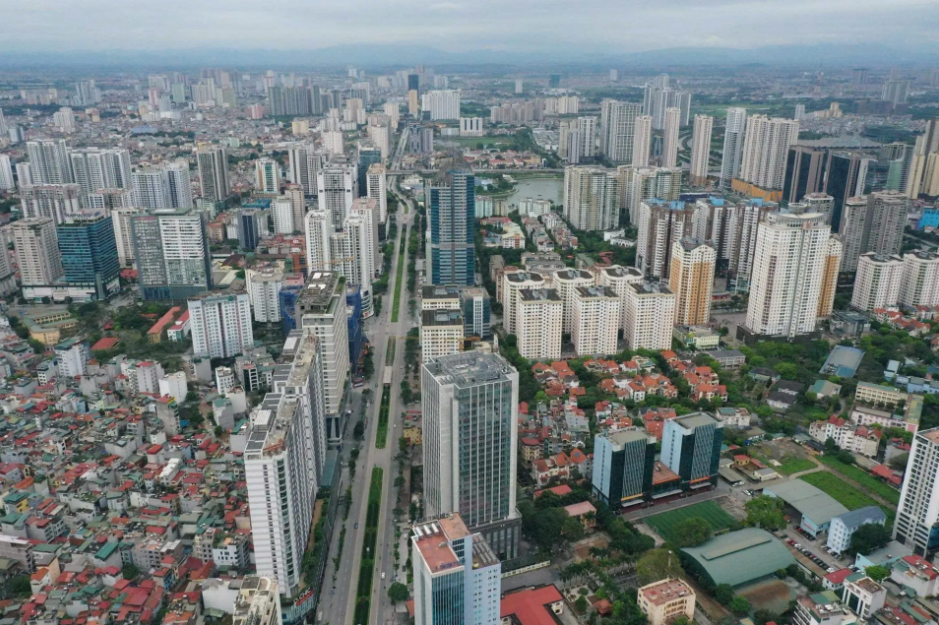
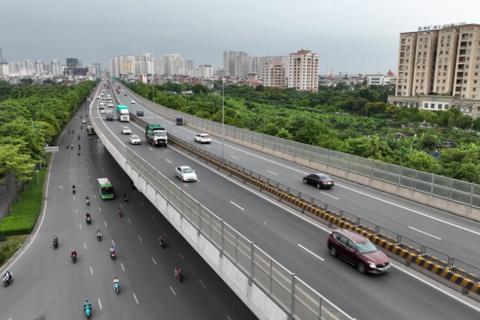
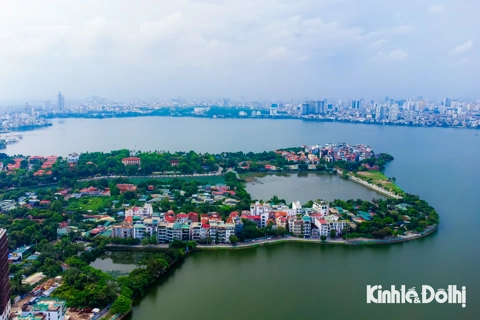
Hanoi from above. Photo: Pham Hung/The Hanoi Times
Some argue that housing prices remain high, social housing is insufficient and market development is uneven. How do you view this issue?
This is a reality that needs to be addressed frankly. High housing prices in major cities are the result of many factors accumulated over a long period, from planning and infrastructure to land costs. Meanwhile, social housing has not met expectations.
The encouraging sign is that policy thinking has changed clearly in the new laws and government decrees, with a focus on balanced development and harmonizing the interests of the state, businesses and the public.
The most important task now is transparent and coordinated implementation while avoiding local interest groups. Regulation should focus on two main areas.
The first is land use regulation, targeting effective land use by housing segments with real demand and its impact on prices.
The second is financial regulation through interest rates, lending conditions, repayment periods and taxes and fees for different segments such as commercial housing, social housing and mid-priced housing.
It is also important to soon establish a National Housing Fund, primarily for social rental housing, with authorities allocating land and creating clean sites. At the same time, there should be practical support mechanisms for homebuyers, such as preferential interest rates, longer repayment periods and eased lending conditions, which can help reduce effective purchase prices. Implementing these solutions will help achieve more balanced development across housing segments.
What are the fundamental solutions for stable and sustainable real estate development in 2026?
The fundamental solution remains institutional reform combined with more effective implementation. Where newly issued laws face obstacles in practice, the central government should promptly issue resolutions and decrees to remove these bottlenecks, ideally as early as January 2026.
At the local level, authorities need to link long-term planning with synchronized infrastructure development, simplify investment procedures and shorten processing times and integrate key steps in the project investment process.
Local governments should also proactively create clean land reserves. At the central level, clear and breakthrough investment mechanisms such as PPP, BT and FDI need to be issued and implemented to accelerate progress.
For businesses, it is essential to improve governance, strengthen financial capacity and focus on projects that meet real social demand. When institutions become more open and trust is reinforced, real estate will continue to be an important economic sector and make a positive contribution to the goal of double-digit GDP growth from 2026.
As the Lunar New Year approaches, do you have a message for businesses and homebuyers?
I hope real estate businesses remain committed to long-term strategies, comply with the law and align their interests with those of society.
For investors and the public, a long-term perspective is essential. Choose transparent projects that match real needs and avoid creating artificial prices and artificial demand as well as speculation and waste of social assets.
On the occasion of the Lunar New Year of the Year of the Horse 2026, I wish the business community and the public good health, resilience and confidence as we work alongside the Government to build a healthy real estate market and contribute to fast and sustainable national development toward the goal of becoming a high-income country by 2045.
Thank you for your time!.